
1 How good and pleasant it is when God’s people live together in unity!
2 It is like precious oil poured on the head, running down on the beard, running down on Aaron’s beard, down on the collar of his robe. 3 It is as if the dew of Hermon were falling on Mount Zion. For there the Lord bestows his blessing, even life forevermore.
What does this particular Song Of Ascent have to do with us?
How does the church's life together influence how it communicates to people who don't yet believe its message?
Why does any of it matter anyway?
Ah.
Sunday.
8:30. 10. 11:30.
 He's the author of books that are both critically acclaimed and wildly popular, such as The Word According To Garp, A Prayer For Owen Meany, and The Cider House Rules.
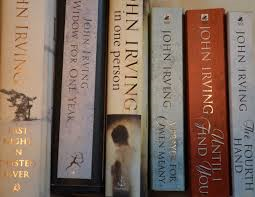 Most Irving novels blend high hilarity, deep pathos, and improbable plot twists to craft narratives that are both entertaining and enriching.
And he's known for something else: he writes the last sentence of his novels first. Once that wording is set, the rest of the novel is ready to take shape. In fact, that process drives The Last Night In Twisted River, one of my favorite Irving novels of all.
And I can't help but think that what works now for John Irving worked earlier for John the author of the Fourth Gospel, also known as John The Evangelist.
In John 20:31 -- not exactly the last sentence, but pretty close, especially if John 21 is a sort of appendix to the rest of the book -- John very clearly states his reason for writing Jesus' story:
31 But these are written that you may believe[a] that Jesus is the Messiah, the Son of God, and that by believing you may have life in his name.
Everything John includes, then, is for that singular purpose: that you might believe and that by believing you will have life in his name.
I can imagine the inspired author getting that sentence down on
Most Irving novels blend high hilarity, deep pathos, and improbable plot twists to craft narratives that are both entertaining and enriching.
And he's known for something else: he writes the last sentence of his novels first. Once that wording is set, the rest of the novel is ready to take shape. In fact, that process drives The Last Night In Twisted River, one of my favorite Irving novels of all.
And I can't help but think that what works now for John Irving worked earlier for John the author of the Fourth Gospel, also known as John The Evangelist.
In John 20:31 -- not exactly the last sentence, but pretty close, especially if John 21 is a sort of appendix to the rest of the book -- John very clearly states his reason for writing Jesus' story:
31 But these are written that you may believe[a] that Jesus is the Messiah, the Son of God, and that by believing you may have life in his name.
Everything John includes, then, is for that singular purpose: that you might believe and that by believing you will have life in his name.
I can imagine the inspired author getting that sentence down on