X

Uncategorized

Church; Leadership, Uncategorized
Top Five Tuesday — Top Five Benefits Of Choosing Bold Over Cool
April 18, 2017 at 3:11 am 0
A few years ago, I repented of my attempts to be cool. At that time, I'd led Good Shepherd to have a "church crush" on a large congregation in the northern part of the US, and so for a season we tried to mimic much of what that church did. And that church was cool. The problem was, in our attempts to be cool, we often overlooked the raw power of the Gospel.  In our efforts to mimic someone else, we forgot how God had implanted us with a once-in-the-universe congregational DNA and we'd never live up to OUR potential if we were trying to live into someone else's. So around 2011 or so, I repented of my own foolishness, got armed with a marvelous mission statement of inviting all people into a living relationship with Jesus Christ, and our church recovered who we really were.  And are.  Which trends more towards bold than cool, more to emphatic than clever. What are the benefits of such a shift?  Here are five:
  1.  More people get saved.  Sound too Baptist?  Good.  More Methodists should sound more Baptist when it comes to an urgent concern for the salvation of people's souls.  We realized that relatively few people are "clevered" into the Kingdom; instead, they are invited.  Which we do, repeatedly.  Even on Easter Sunday.
  2. Creativity gets loaded into the sermon.  We used to believe we had to have a creative element (drama, video, or radio-friendly secular song) to augment the sermon.  But once we stopped having those "how can this series be cool?" meetings, we stopped forcing elements where they didn't belong.  And, serendipitously, we create more of it organically, as a part of the sermon itself, and people respond accordingly.
  3. We capitalize on our unique strengths.  Praying in tongues and praying for healing smack more of old fashioned Pentecostalism than they do of modern mega-churches.  Yet we have plenty of people who do both at Good Shepherd.  And so we now highlight our desire to be "awake to the Holy Spirit" as a core part of our identity.
  4. We're not as vulnerable to current trends and fads. When you know who you are -- we're the full-color church who is inviting all people into a living relationship with Jesus Christ -- then you're much less likely to buy the next product, hire the newest speaker, or enter into the hottest church network.  With identity comes consistency.
  5. I do less self-editing and more Scripture proclamation.  Like I said in the "It Is Finished" sermon from the "Finished Business" series, I'd love to offend folks right into the arms of the King and the gates of the Kingdom.
  Growing Church Congregations  
CONTINUE READING ...
Uncategorized
The Weekend Ahead
April 14, 2017 at 6:59 am 0
Seven worship gatherings. Multiple baptisms. One Savior. Here's what's ahead: Good Friday Service -- 7 p.m. tonight in the Moss Road Worship Center.  We'll sing. We'll pray. Wayne Hobson will preach.  We'll celebrate the Lord's Supper on the day that embodies what the body broken for you and blood shed for you is all about. Easter SATURDAY Worship -- 5 p.m. April 15 in the Moss Road Worship Center.  We want to give an Easter worship opportunity to those unable to come on Sunday.  We want to ensure we make space for those coming on Sunday.  So we'll have Easter Saturday worship at 5 p.m. tomorrow -- the message and music will be the same as Easter Sunday:  the conclusion of the Finished Business series called "A Funeral For Death." Easter SUNDAY Worship -- The message will (again) be "A Funeral For Death," accentuated by the "tomb to womb" movement of baptism at multiple gatherings.  Here's the schedule: Moss Road:  8:30, 10, 11:30 Zoar Road:  10, 11:30 Latino Ministries (in the Living Room at Moss Road):  11:30. All those gatherings are times when we can invite all people into a living relationship with Jesus Christ.
CONTINUE READING ...
Uncategorized
How A Sermon Outline Is Different From A Legal Brief
April 13, 2017 at 3:05 am 0
Not long ago, in the middle of a conversation about how to design sermons, an attorney friend of mine chimed in with the oft-repeated mantra: Tell them what you're going to tell them.  Tell them.  Tell them what you told them. We learned that pattern in writing middle school essays.  It was reinforced in composing college papers.  It reached its pinnacle -- for my friend at least -- in preparing and then arguing legal briefs. And it's a pattern we have to unlearn if we're going to preach in a way that captures the attention of those who hear us and then moves them towards a transformational shift in their lives. In other words, what works for litigating doesn't necessarily work for sermonizing. And before I tell you this new pattern I much prefer, I need to tell you the source of the pattern (see how I'm keeping you in suspense?).  The source is the night I went to an open meeting of Alcoholics Anonymous; a meeting hosted on the Zoar Road Campus of Good Shepherd.  I attend on occasion to show our church's support for the mission and ministry of recovery. Anyway, at this particular meeting, pilgrim after pilgrim said different versions of the same thing: "I'd be dead if I hadn't started coming here." Two thoughts came immediately to mind:  1) how can we cultivate that level of honest desperation in our LifeGroup ministry? and 2) how can I infuse Gospel proclamation with that same sense of significance? So how to apply the urgency of that night to preaching?  Here's a new mantra: Tell them you're going to tell them something. Tell them they'll die if they don't get it.  Keep them hanging a little longer. Tell them. After that, you show them in animating ways how the "thing" you told them will renew and redefine their lives. Seems like a tall order, doesn't it? But why else would Paul say "Woe to me if I do not preach the Gospel!"  It really IS a matter of life and death, eternally so.
CONTINUE READING ...
Uncategorized
The Most Powerful Sermon Outlines … Aren’t Sermon Outlines
April 12, 2017 at 8:13 am 0
We preachers often find ourselves in the midst of a quest for sermon outlines.  Many of us think if we can just find the right outline, the right scaffolding from which to build the rest of the message, then everything else will fall in place. In fact, as Easter approaches, I remember one resurrection sermon from yesteryear in which I preached that Jesus stills rolls away stones and does so unexpectedly, tenaciously, lovingly, and eternally.  Get the near-rhyme in all that? But what happens when you move from sermons with multiple points to those with one point?  When your sermon is built around a single bottom line, as mine are these days, how in the world can you outline that?  How can you possibly outline one thing and one thing only? In that case, I have found it helpful to move from thinking of sermon outlines to focusing on sermon journeys. Sermon journeys in which the preacher is a tour-guide with the following agenda: Get on the bus Get into the Word Get to the bottom line Get to life. Here's what I mean.   Get on the bus If you're a tour guide, the early moments of the message are to get as many people as possible in the room on board with you.  You can't get the people to their destination if they never get on the bus with you in the first place.  That's why the majority of my messages begin with an anecdote or experience or observation followed by words like "you know what I'm saying.  You've lived this.  Some of you are living this right now." My upcoming Easter Sunday message, for example, is going to begin with a memory of a most traumatic Easter Sunday from exactly 20 years ago, and how that incident resulted in a perspective that the worst thing is the same as the final thing. Get Into The Word After getting everyone on board, the preacher-as-tour guide moves from the particulars of human life into the excavation of Scriptural texts.  And in this movement of the sermon, the preacher will want to share with congregation the joy of discovery:  by that I mean, please give a window into the rewards of deep bible study and the refreshment that comes from gleaning new insights into old texts. That means, of course, that you are both open to and committed to that process of Scripture discovery -- and willing to share both the pleasures and the struggles of getting where you done got!   Get To The Bottom Line After moving from get on the bus to get into Scripture it's time to get to the bottom line.  The bottom line is the one thing you want people to remember, to internalize, and to apply to their lives.  Crafting bottom lines that are theologically true, verbally compelling, and personally applicable is difficult but rewarding work.  In searching for the right wording, I often bounce options off of my Good Shepherd colleague Chris Thayer -- doing so not only helps me find the right landing place but helps him become a wordsmither in his own right.  Some bottom lines I've gotten to in recent weeks include: The harder the struggle, the louder the praise. God frustrates you in this life so you will anticipate the next one. We over-identify with celebrities because it's easier to follow their lives than to live our own. When you take what belongs to God, who cleans up after you? Truth isn't a what.  It's a who. His perfect finish means your fresh start.   Get To Life At this stage of design, the hard work has been done.  What remains is to get to life.  How does the bottom line impact the daily lives of your hearers?  To what can you compare it?  In whom have you seen it come alive?  When has it altered your perception not only of your life, but also of your God?  And what concrete, sticky action point is there for the congregation to take home with them? By the end of the journey, I pray that the preacher is exhausted and the congregation is exhilarated.  You're exhausted because you've poured best into design and delivery.  They're exhilarated because that's what the proclamation of the word of God does in people's lives. And the next day, when it's Monday and you've got to start all over again, you can rest easy.  You don't have to devise a great sermon outline. You just need to design a compelling sermon journey.      
CONTINUE READING ...
Uncategorized
Top Five Tuesday — Top Five (Or Six) Favorite Books On Preaching
April 11, 2017 at 3:12 am 0
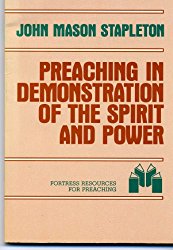
Well, with Easter Sunday approaching, preaching is on the minds of a lot of us, well, preachers. And through my years in seminary and then full time ministry, a number of books have shaped my understanding of what it means to preach.  Namely: what is the purpose of a sermon and how do you design it and deliver it so that you get there? So here are five that have influenced me the most: 6.  John Stapleton, Preaching In The Demonstration Of The Spirit And Power.  In spite of the book’s title — which sounds like it comes straight from a Pentecostal publishing house — Stapleton is a confirmed mainliner who stands a couple of feet (at least) my theological left.  Yet this book remains resonant with its emphasis that the preacher should strive to give the congregation an experience of  rather than merely a talk about the particular biblical truth.  Almost every week, my preparation notes will include “give an experience of . . . .” stapleton 5.  Ralph Lews, Inductive Preaching: Helping People Listen.  If you went to Asbury Seminary in the 1970s or 80s, you have to include this one on your list.  Lewis helped me realize that most people listen & learn from the particular to the general.  In other words, you don’t start with the truth or proposition of the day, you identify with and carry the congregation on a journey that gets you there.
4.  Stuart Briscoe, Fresh Air In The PulpitBriscoe had a marvelous, long-term ministry at Elmbrook Church in Wisconsin, and this book shows you why.
3.  Frederick Buechner, Telling The Truth: The Gospel As Tragedy,  Comedy, and Fairy Tale.  Buechner’s influence on preachers and preaching far outweighs his actual output of sermons.  He served as a pastor-chaplain for nine years at Phillips Exeter Academy and then settled down to write books at his mountainside home in Vermont.  So he writes about preaching more than he actually preaches.  Nevertheless, this one is a keeper.  I hope to have a bit of each — tragedy, comedy, and fairy tale — in each message.  Tragedy: the human situation.  Comedy: the gospel goodness.  Fairy Tale: what that goodness is like in your life “ever after.”
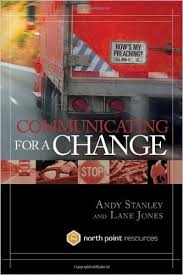
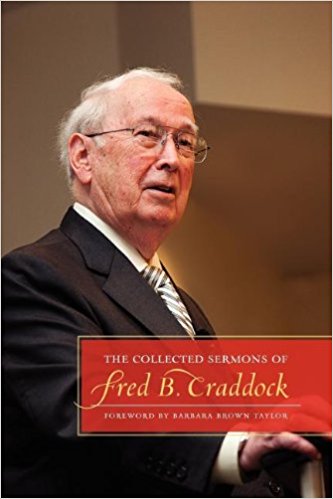
2.  Fred Craddock, The Collected Sermons Of Frederick B. Craddock.  Oh, what a treasure this is.  Verbatim transcripts of more than 50 sermons from this homiletic genius who combines whimsy and pathos better than anyone I've heard.  And speaking of hearing, you need to know the unique cadence and inflections of Craddock's voice to appreciate fully these sermons you'll read.  For an example, click here.   Craddock   1.  Andy Stanley, Communicating For A Change.  Andy Stanley is so much the best preacher I’ve ever heard that he’s at least a lap ahead of the rest of the field.  Anyway, Communicating For A Change conveys the two-headed genius of a sermon design that has the following movement: ME WE GOD YOU WE and crystallizing the message of the day into one, memorable truth.  Before I read this, the people of Good Shepherd had to endure four-point, fill-in-the-blank sermons.  No one ever came up to me two weeks later and said, “Talbot, I love those four points you made!” and then recited them all.  But many times these days people repeat the bottom line from messages given weeks or even months ago.  This past Sunday, for example, a number of folks posted the sermon's one point on social media:  His perfect finish means your fresh start.
Communicating For A Change
One of my great hopes from my now two-year-old partnership with Abingdon Press is that these sermon collections that have become bible studies will, along with these six books named above, help preachers across the connection design and deliver stronger sermons.  I believe that those included in The Shadow Of A Doubt, in particular, can easily be adapted, personalized, and internalized for congregational use.  You can order Shadow (along with the other Abingdon releases) here.

CONTINUE READING ...