Talbot Davis
February 23, 2015 at 3:30 am
0
To say yesterday's sermon was a departure from the norm is an understatement.
First: it was not a one-pointer. It was a three-objectioner.
Second: it hopped around the bible instead of digging into one particular passage.
Third: we did a responsive reading of Genesis 1 in the middle.
Fourth: it was a lot of fun. I hope you enjoy reading it as much as I enjoyed preparing and then delivering it.
-------------------------------------------------------------------------------
I remember that time when I was in 7th grade and as some of you know an outspoken atheist, and I was invited to a middle school boys’ bible study. At Larry Elliott’s house, if that helps you for context. And the bible study leader – who I think was with Young Life – asked us to write down questions we had about the bible, Jesus, and Xnty. And I wrote mine so eager and defiantly – because my mind was so agile! – asking this: “What makes Jesus any different from or better than other great religious leaders like Buddha, Mohammad, or Krishna?” And the leader gathered up all the slips of paper – I have no idea what the other 7th grade boys asked – read mine and said, “We’ll get to that one soon, OK?” And then he never did.
And that’s the way it is with a lot of us, isn’t it? We’re talking about Every Life Counts, it’s about sharing our faith with people who don’t yet have a living relationship with Jesus Christ in such a way that they begin one, and most of us are scared to death of even having those conversations. And then we are even more frightened when someone (7th grade or not) has a legitimate objection to what we believe. So I want to do something completely different today for my time with you. I want to go through three of the most prominent objections that people have and equip you in this place to answer them well. Not to avoid the questions like that youth leader, not to respond in righteous anger to them like we’re tempted to do, and not to cower in fear at them either. But to give a level-headed and spirit-filled defense of the faith. So today’s message will be totally different but I pray a lot of fun. And those of you here who are skeptics yourselves – I recently read that 17% of atheists go to church! – I pray you will overhear some good news (actually, the best news), that your life counts to an everlasting and ever-loving God.
Here’s the first one: SCIENCE HAS DISPROVEN THE BIBLE. There’s a very compelling case here. According to science, the universe is about 15 B years old. In the way some people read Genesis, it’s more like 6,000. Science would tell us that humans evolved from other hominids in the Rift Valley of Africa. Genesis suggests we all come from two spontaneously created people in southern Iraq. In my own family the phrase “no thinking person can believe the bible” was bandied about on more than one occasion. I still remember reading the book in which this ape-human evolutionary progression (AV) was conveyed as fact beyond any reasonable doubt. So how do you answer? You probably have those same objections in your family, among your friends, and in your classrooms.
Well, here’s where it’s more vital than ever to remember that the bible is not a book; it’s a library. And in a library (or even a bookstore), you got different sections with very diffrerent kinds of writing: fiction, poetry, biography, self-help, history. And you read the auto-repair book very differently from how you approach the collection of poems, right? So with that analogy in mind, we need to figure out what kind of literature is in Genesis 1 where we find the most comprehensive creation story. Is it science, is it history, is it something else? Well, lets’ do something together, OK? Remembering that Genesis 1 and most of the bible was written to be heard and not read because the vast majority of people in that time were illiterate. So here’s what we’re going to do: Responsive Reading of Genesis 1 in which I read the "verse" and the people read the "chorus": "And there was evening, and there was morning, the first day . . . "
OMG! You experience it collectively in that manner and it is so obvious that Genesis 1 is a poem, an epic, a hymn. It has verses and a chorus. Verses and a chorus. The role of God as creator is so beyond any human language to convey that it must be sung. We robe the words of their power when we try to read it as science or as a textbook. In fact, it literally begs not to be read literally – did you notice that you have THREE FULL DAYS AND NIGHTS before the creation of the sun and the moon? Surely Moses and his editors were smart enough to see that scientific impossibility and would have corrected it if it really mattered to them. But it didn’t! And so it doesn’t!
Genesis 1 is completely unconcerned with the HOW and totally absorbed in the WHO and the WHY. Every element of this glorious hymn is not only to evoke awe and wonder but to demonstrate defiantly that all these created elements (sun, moon, stars, cattle) are not gods themselves like Israel’s pagan neighbors believed but that they are all subject to the one true Creator God. So in any event, the fundamental fact remains: Genesis 1 is a work of theological art, religious beauty and we do violence to the text to read it like a textbook. This is a way of taking the inspiration of the bible MORE seriously, not less, no matter what some of our more fundamentalist friends might say. So to complain that the bible conflicts with science is like being angry at an apple for not being an orange: they have different purposes altogether.
You have people throw the old bible/science conflict and you just throw this stuff right back at them. The bible is a library; Genesis 1 is about who and why & not about how; and that great hymn gives immeasurable help to your living relationship with Jesus Christ. You believe Jesus because of Genesis 1 and not in spite of it.
Second objection: HOW COULD A GOOD GOD ALLOW BAD THINGS TO HAPPEN TO GOOD PEOPLE? My gosh. We just observed the ten year anniversary of the Asian tsunami. Next year will be 10 of Hurricane Katrina. Five since the Haitian earthquake. Ebola. ISIS. Recession. On and on and on until you get to a thousand calamities more local and more personal to the people of Good Shepherd. And so folks understandably ask, “How could God allow all this? He is either NOT all good or he is NOT all powerful. One of those two has to be sacrificed.” Well, you know what? People have been wrestling with that question since the beginning of time and there is STILL no thoroughly satisfactory answer. And as you try to answer that objection, it’s better to acknowledge that part than to come up with some empty clichés.
Now: we DO believe that every bit of chaos in the world is the fallout of the Fall. That when the human race rebelled against God it let loose a chain of events & misery and we still feel its ripple effects. And we also believe that God somehow uses difficulties to mold us into stronger & more mature followers than we would be otherwise – which is why most people handle adversity a lot better than they handle success. But those are the kind of insights you see more in the rearview mirror of life than when you are in the season of pain. But still, perhaps the most authentic way to answer this objection is to acknowledge the difficulty of the question AND to ask, “have you considered the alternative?” And the alternative – meaning that because pain exists God must not – is a life devoid of any real meaning and purpose. A life in which absurdity will always have the last word.
Speaking of which, a man named Rob Sherman of Chicago was known a few years ago as “The Atheist Guy.” Travelling lecturer of some notoriety. Anyway, he was charged with misdemeanor domestic battery a few years ago for punching his 16 year old son. Very sad, but his explanation was enlightening: “I wanted to put the fear of God in him.” Huh? Absurdity has the last word in that way of looking at the world.
Yet back to the subject at hand. A generation ago Rabbi Harold Kushner wrote a best-selling book dealing with this very subject of bad things & good people . . . only most folks got the title wrong. They thought it was called Why Bad Things Happen To Good People when the title was actually When Bad Things Happen To Good People. Which was the rabbi’s way of saying that in Judeo-Xn thinking we don’t know why the stuff happens, we just acknowledge that it does and it’s what we do next that really matters. And you know Jesus was a rabbi, right? That’s why we see those times and seasons as occasions to make Jesus famous by how we come alongside people in trouble. It’s why I’m so proud of our students who spent a week last summer in Moore, OK (AV) repairing tornado damage. Why did the tornado happen? We don’t know. We just know our calling in the wake of it. It’s even why one of the most ironic ways this church grows is through . . . funerals. People get exposed to what we are like by seeing us in action in the season of people’s pain & they return to check us out.
So you get that objection and acknowledge its inherent difficulty and then declare that we want to enlarge Jesus’ fame with our response to the very things that make ppl question God.
And then the third and final one, the question I was so sure would stump that random youth leader in 7th grade: WHAT MAKES JESUS ANY DIFFERENT FROM ANY OTHER RELIGIOUS LEADER? Interestingly, I asked that same question to my best friend four years later when he was laying some gospel smackdown on me. And his answer was both simple and sublime: “of all the great religious leaders in world history, Jesus is the only one who claimed to be God and then proved it by rising from the dead.” Yep, that’s it. John 10:30:
I and the Father are One.
John 11:25:
25 Jesus said to her, “I am the resurrection and the life. The one who believes in me will live, even though they die;
Supported by Paul in Colossians 2:9-10,
9 For in Christ all the fullness of the Deity lives in bodily form, 10 and in Christ you have been brought to fullness. He is the head over every power and authority.
The resurrection of Jesus from the dead is among the most documented of events in all of antiquity – not only via four biographies but through the word of more than 500 people, many of whom were willing to die for what they had SEEN rather than deny what they believed.
Jesus claimed to be God. He’s not a great man, he’s not a role model, he’s not a profound teacher. He is either God or is a liar of the David Koresh variety. He is either God or he is mentally unbalanced. Nope he claimed to be God and then to verify that claim he reversed the power of death. Mohammed never made that claim and you can still visit his grave. Buddha never made that claim. All the gods and goddesses of Hinduism – none of them have the keys to conquer sin and death. Jesus alone. He is not one of many; he is the one and only. In the moment when my friend gave that answer that was sublime in its simplicity, the universe changed for me. It was a brief answer with eternal consequences.
And when you get that “aren’t they really all just the same?” objection, I invite you to give that simply sublime answer & do it in the same loving, universe tilting way my friend did so long ago.
Because yes, every life counts and every doubt matters. Consider yourself prepared and equipped not only to answer the objections others bring to you, but those you have been holding on to yourself as well.
CONTINUE READING ...


 While in India, we won't see the Taj Mahal.
We won't see the Sisters Of Mercy mission in Calcutta.
We won't see Asian elephants.
We won't even see Bengal tigers. I hope.
But we will see a number of sights that are unique to the sub-continent. So here they are: five things James-Michael Smith and I will see over the next several days that you just won't see in the USA.
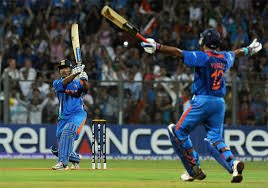
1. Indian Cricket. India is all cricket, all the time. That still doesn't help me figure the rules out. But the uniforms looks nice.
While in India, we won't see the Taj Mahal.
We won't see the Sisters Of Mercy mission in Calcutta.
We won't see Asian elephants.
We won't even see Bengal tigers. I hope.
But we will see a number of sights that are unique to the sub-continent. So here they are: five things James-Michael Smith and I will see over the next several days that you just won't see in the USA.
1. Indian Cricket. India is all cricket, all the time. That still doesn't help me figure the rules out. But the uniforms looks nice.
 2. Sacred Cows. Yes, the name fits. In India, all traffic yields to our bovine friends.
 3. Aggressive Transport Trucks. Traffic laws in India tend to be more suggestive than prescriptive. So you're wise to allow these garishly determined trucks have the right of way.
 4. Roadside Hindu Shrines. These small structures are everywhere. People pop in, leave an offering, say a prayer, and head out. Oddly, many of them have statues of lions serving as sentries -- strange in a land much more known for tigers.
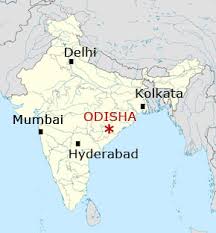
 5. Courageous Christians. Those who follow Jesus exclusively are a minority in India, and an oft-persecuted one at that. In most of the churches we'll attend, the men sit on one side of the room while women sit on the other. Join me, James-Michael, and others in praying for revival in Odisha State, India.