X

Methodism

Methodism
“Both And” Vs. “Either Or”
January 5, 2011 at 6:00 am 0

Methodism at its best has long been known for its ability to hold competing approaches to the faith together at the same time. In theological circles, we're known as "both/and" people as opposed to "either/or."

Historically, you see this in Methodism's emphases on . . .

1. Both evangelism and good works as vital to a healthy congregation.

2. Both personal piety and servant ministry as vital to a healthy Christian.

3. Both human free will and divine sovereignty as descriptive our relationship with God.

4. Both an intellectual grounding behind faith and a warm expression of faith.

5. Both salvation from the power of sin (for holiness) and from the penalty of sin (from hell).

Those are but five of many I could choose as representative of the Methodist approach to Christianity.

Last Sunday, I gave our church an address that spoke about some other "both/ands" that are somewhat unique to Good Shepherd:

Both culturally connected and charismatic. We try to speak the tech-heavy language of 21st Century America while also holding on to passionate belief in the ongoing power and gifts of the Holy Spirit.

Both "out there" and "in here." We do our best to balance our burden for people who don't yet know how much they are loved by God with our calling to care for those already in the flock.

Both accepting and challenging. As I said on Sunday, we "do" accepted much better than we "do" challenge. I sense God is calling us to make 2011 a year in which that dynamic becomes more in balance.


CONTINUE READING ...
Methodism
Methodists in Utah
September 9, 2010 at 7:27 am 2


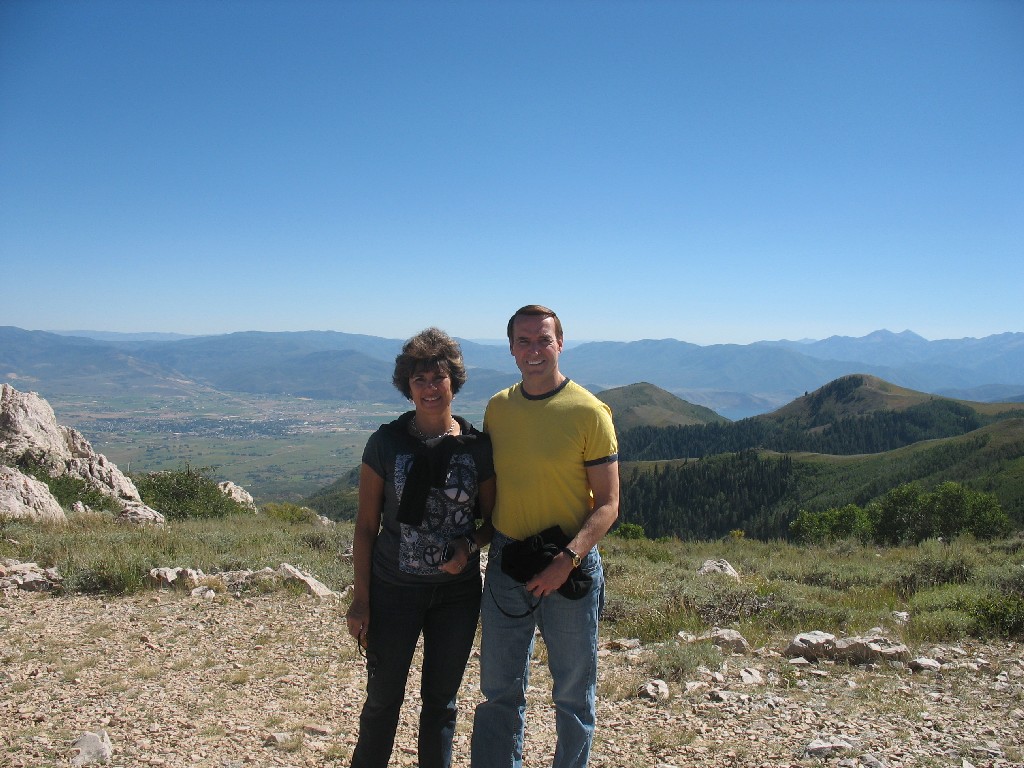
These pictures are from the stunning mountainside of Park City, Utah.

Julie and I were there for three days last week at a gathering of Methodist pastors.

A gathering of Methodists in Utah sounds weird, I must admit. There's another religious group beginning with "M" that we usually associate with that state.

Yet there we were at the Leading Edge Conference, an annual gathering of pastors of the 100 highest attended United Methodist Churches in the Country. This year, 89 of those pastors showed up along with 20 or so bishops . . . who I think wanted to see what we are up to.


What are we up to? The purpose is three-fold: 1) share best practices; 2) mutual encouragement and exhortation; and 3) planning and praying for the renewal of the denomination.

Some interesting statistics about these churches:

1) The largest is the Church Of The Resurrection in Leawood, Kansas with about 17,000 members and 8,000 in weekend attendance.

2) The smallest of the "100" averages 1189 people per Sunday.

3) Four churches come from Mecklenburg county: Matthews, Good Shepherd, Myers Park, and Davidson.

4) Of the 89 pastors in Utah, 23 hold degrees from Asbury Seminary. That's a remarkable statistic, especially considering that ATS is not an "official" United Methodist school in the same way as Duke, Emory, or SMU.
CONTINUE READING ...
Methodism
Top Five Tuesday — Five Reasons I Am Methodist
June 15, 2010 at 6:00 am 4
I am a Christian first of all.

But within that larger confession of faith, I have identified with the particular expression known as Methodism for the last 28 years.

And since I spent a couple of days last week at a uniquely Methodist gathering -- the Western North Carolina Annual Conference meeting -- it got me wondering: why have I identified with this particular expression of the Christian faith? I could have located with the Baptists or the Presbyterians or, more likely, some version of the charismatics.

Why did I land in Methodism and why have I stayed?

So here goes:

1. Free Will. In contrast to our friends in the Reformed/Calvinist tradition, Methodists take I Timothy 2:3-4 at face value: God "desires all men to be saved and come to a knowledge of the truth." In other words, we do not believe that God predestines some to salvation and predestines more to damnation and we essentially live out the script already prepared for us. My very first church experience was in a strongly Calvinistic church and although the people there were smart, loving, and faithful, it nevertheless sent me on a journey in search of people who were also smart, loving, and faithful . . . and believed in free will. John Wesley and the Methodists were and are those people.

2. Prevenient Grace. "Prevenient" is an 18th Century word meaning "to go before." Wesley -- who lived 1703-1791 -- applied the word to the working of God's grace in our lives. According to Wesley and the Methodists, God's grace operates in our lives when we are not aware of it. He is "going before" us, drawing us back to him. I see it in Luke 15, I've experienced it in my own life, and believe it to be biblical truth.

3. Faith AND Works. At its best, Methodism has had a good balance between "faith" and "works." So a saving relationship with Jesus always expresses itself in works of mercy and kindness in the Methodist tradition. Sadly, some within Methodism have so emphasized good works that they neglect to talk about or call for personal conversion. At Good Shepherd, we try to maintain the proper balance.

4. Holy Spirit. Though most people are not aware of it, early American Methodism was among the first of the "holiness" churches. Our Methodist ancestors on this continent had a passion for the power of the Spirit and for holy living. Unfortunately, as the church became more mainstream & mainline in the 20th Century, such enthusiasm was frowned upon. We hope to be agents in the re-filling of the Holy Spirit in the Methodist movement. Our history is why being Methodist and charismatic makes perfect sense to me.

5. Childhood. I have to believe there has always been something subconscious at work drawing me to Methodism. My dad was on the law faculty at SMU -- Southern Methodist University, after all -- and in many ways our lives revolved around that school. For me, it also revolved around supporting the Mustang football and basketball teams -- an exercise long in passion but lacking in satisfaction. Nevertheless, something settled in me from a young age that Methodists were good people to be with.

CONTINUE READING ...
Methodism
A Methodist Preacher’s Cardinal Sin
April 15, 2010 at 6:44 am 16
What is a cardinal sin for Methodist preachers?

Re-baptism.

It's one of the things that can get us in some ecclesiastical trouble. If we knowingly baptize someone who was baptized as an infant or child, we are likely to hear from Methodist higher ups.

The history behind the "rebaptism controversy" is quite long (you can read some here) and much broader than just the Methodist movement. Yet the driving distinction between those who re-baptize and those who don't revolves around who is the main actor in a baptism. Is baptism something God does or is it the volitional choice of the person being baptized?

Historically, Methodists have believed baptism is what God does -- so we don't "re-do" what God has already done.

Our Baptist friends, among others, contend that the person being baptized is the central figure in the sacrament -- that's why in their view an infant baptism is not valid. What infant can decide from himself or herself to follow Christ? So they will eagerly re-baptized people.

Yet as I have wrestled with the issue, two other items come to mind. First, baptism in the New Testament seems to be an exclusively "after" event: it is observed "after" a person comes to faith in Christ. (Yes, Acts 16:16 and 16:33 suggest "family wide" baptisms, but those references are imprecise at best.)

The bigger argument against a firm "no rebaptism" policy is Acts 19:1-7 which I include below:


1While Apollos was at Corinth, Paul took the road through the interior and arrived at Ephesus. There he found some disciples 2and asked them, "Did you receive the Holy Spirit when[a] you believed?"
They answered, "No, we have not even heard that there is a Holy Spirit."
3So Paul asked, "Then what baptism did you receive?"
"John's baptism," they replied.

4Paul said, "John's baptism was a baptism of repentance. He told the people to believe in the one coming after him, that is, in Jesus." 5On hearing this, they were baptized into[b] the name of the Lord Jesus. 6When Paul placed his hands on them, the Holy Spirit came on them, and they spoke in tongues[c] and prophesied. 7There were about twelve men in all.

What does the story describe?

A re-baptism . . . because the converts did not fully comprehend the nature of their first baptism. Once they had received full teaching about Christ and his Holy Spirit, they received it with joy and were baptized into the faith. A volitional choice made after conversion.

Hmmmm. A biblical second baptism.

Infant baptism is certainly different that "John's baptism" (19:3) . . . yet both involve incomplete or absent knowledge & awareness.

And just like the converts in Acts 19, those who have been baptized as infants need to receive the urgent news of what Christ has done for them so they too can make a volitional choice for faith.

And after that? That's a matter for more prayer. And conversation.

CONTINUE READING ...
Methodism
Insights From A Former Methodist
March 4, 2010 at 8:08 am 2
The Methodist blogosphere (yes, it exists) is abuzz about the recent series of posts from Craig Groeschel of LifeChurch.tv.

You can read them in succession here. Click on the link, and scroll down to the posts from February 22 - February 27.

Groeschel started ministry within Oklahoma United Methodism, grew frustrated with the bureaucratic hurdles he would have to jump in order to start a new congregation, and ultimately launched an independent church.

LifeChurch.tv now has well over 20,000 people attending in multiple sites all over the country, including the world's most advanced online church community. You can find out more about it here.

Groeschel's recommendations for us -- as a former part of "us" -- are pretty straightforward: 1) discard the itineracy system of appointing pastors; 2) change or abolish the apportionment model in which local churches underwrite the expenses of the national and international level bureaucracies; 3) simplify the ordination process; 4) enable more churches to go multi-site; 5) stop funding any efforts at denomination-level marketing or branding; and 6) arrange an amicable separation between theological liberals and conservatives.

I believe many of Groeschel's suggestions will become reality not so much by choice as by necessity. The itineracy and apportionment, in particular, will likely undergo fundamental change within the next 15 years or collapse under their own weight. The same is true for our cumbersome way of approving and ordaining pastors.

But I hope one change happens immediately: let's give up the ghost on denomination-level marketing. I've posted on the subject here. Funnel thoes funds and that energy towards enabling local congregations to be the best marketers -- and evangelists -- they can be.
CONTINUE READING ...