
X

Methodism; Leadership

Methodism; Leadership
Top Five Tuesday — Top Five Things Heard At Ginghamsburg UMC
October 26, 2010 at 6:05 am 6
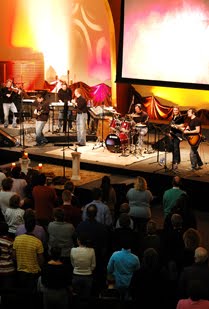
I spent three days in Ohio last week at Ginghamsburg United Methodist Church's Change The World Conference. I went as part of the Reynolds Leadership Program which sends 25 pastors from North Carolina to various training events four times per year.

Ginghamsburg is a Methodist miracle. When Michael Slaughter became the senior pastor there in 1979, it averaged 90 people in worship & met in a two room church building. Today, with Slaughter still at the helm, it hosts about 4400 people per weekend meeting in sites throughout the Dayton area. It has long been known for innovation in worship, commitment to small groups, and a focused ministry with and for people on the margins of society.
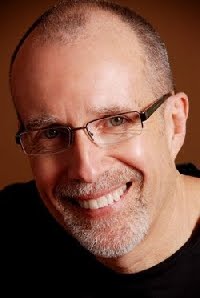


These days, Slaughter serves as more prophet than pastor; more agitator than chaplain. Because of that, he and his team of speakers delivered some memorable -- and provocative -- one liners. Here are five of my favorite:

1. The church’s job is to bring the resources of heaven down to earth, not to send disembodied souls to heaven.
2. If it’s not good news for the poor, it’s not good news.
3. You don’t have to scream Jesus if you do Jesus.
4. Stop asking ‘how many people do we get in?’ Start asking, ‘how many people who are in are we getting out (into the community)?’
5. If you don’t serve, you’ll feel uncomfortable in this church.
CONTINUE READING ...
Methodism; Leadership
My Struggle With Confirmation
August 4, 2010 at 5:00 am 1
Here's a disclaimer to this post: I never went through confirmation class as an adolescent.

So I don't have any memories of nine months of classes, meetings with mentors, and then a holy moment of joining the church just in time to graduate from sixth grade. I just don't.

As a result, my views about confirmation may well be biased.

But the fact is, I struggle with the traditional, year-long confirmation program. And while there are several reasons for my struggle -- including a) the fact that Christianity is less a course to be learned than a decision to be made and then an experience to be lived and b) many young teens see it as "graduation" from church as a whole -- my fundamental reason is this:

It shows a lack of trust in your youth ministry.

Think about it. If you really believe in what your youth ministry is doing, then students will get much of what they need to get about the Christian faith and life within the bounds of the Sunday night program. And that includes the distinctively Methodist contributions to the Christian world. The teens then get the rest at home and in Sunday morning worship.

Why should they come back out for a second helping of the same basic material?

It adds complexity and redundancy when churches should strive for simplicity and focus.

Now I'm spoiled on this. Because I trust our BigHouse Youth Ministry -- in fact, I'm usually blown away by it.

And I know that kids are getting both content and life experience in that venue.

We also offer occasional short-term baptism and membership events and classes through BigHouse. But we don't offer a shadow version of youth group.

Because in our case at least, the youth group we have is confirming all that's good about God . . . and about the teens themselves.
CONTINUE READING ...
Methodism; Leadership
Reflections On 100 Pastors
September 4, 2009 at 9:42 am 0
On Monday, I posted about my attendance at The Leading Edge, a gathering of the pastors of the 100 largest United Methodist churches in the United States based on average worship attendance.

A benefactor underwrote most of the cost of the meeting, so we were able to stay at a gorgeous resort near Jacksonville, Florida while incurring very little cost ourselves.

Some random reflections:
  • It is funny to me how most of us never really get out of high school in terms of making friends and joining groups. The pastors there generally hung out with other pastors of churches the same size. So the 3,000s-on-a-Sunday had one kind of camaraderie, the 2000s-on-a-Sunday had a different kind, and those of us slogging it out at 1500 or so had another. I admit it: I was much more comfortable with a group of "peers" than with trying to impress someone with a really big church and a bigger name. Human nature, I guess, but it was still a hoot to watch and be part of.
  • While we were listening to Adam Hamilton say something that was yet again filled with wisdom and insight, one of my table mates turned to me and said, "You know, I believe that if Jesus himself was in the back of the room hearing this, even he'd be impressed."
  • An inordinate percentage of these largest United Methodist churches were from three places: Houston and its suburbs; Atlanta and its suburbs; and Florida. Yet some of the very, very largest congregations are in the Midwest: Kansas City, South Bend, Indiana, and central Ohio.
  • Mecklenburg County has four churches on the list: Matthews UMC, Davidson UMC, Myers Park UMC, and Good Shepherd.
  • A majority of the churches represented in Ponte Vedra offer contemporary worship as their primary style on Sunday mornings.
  • There is great momentum among this group of pastors for a denomination-wide moratorium on voting & politicking around the volatile issue of homosexuality. The group would be delighted in a General Conference in 2012 that focused on worship and strategy rather than the most divisive issue of them all.
  • I continue to realize what a privilege it is to serve the people of Good Shepherd and the community of southwest Charlotte.
CONTINUE READING ...
Methodism; Leadership
Methodism, Complexity, & Mediocrity
March 24, 2009 at 6:00 am 14
In yesterday's post, I drew a link between a church's complexity and its mediocrity.

Unfortunately, the typical Methodist Church is an inherently complex being. Here are just a few examples of the intricacies of the system:

  • The pastor-in-charge reports to four different entities: the Church Council, the Pastor-Parish Relations Committee (ours is called the SPRT, or Staff-Parish Relations Team), the District Superintendent, and the Annual Conference through the Board of Ordained Ministry. Whew! A lot of masters! Who has the final say? Who knows? While some level of checks-and-balances is no doubt healthy, this reporting structure as currently configured brings about confusion.
  • Most churches in our system invite every conceivable advocacy group -- men, women, youth, music, missions, and others -- to have their own ministry domains and to do their own fund raising. So you have built in competition for calendar time and congregational dollars. If you look at a typical church bulletin, it includes a long menu of ministry options as well as a calendar of upcoming fund raising events.
  • The denomination itself invites its churches to do special offerings on a wide array of . . . you guessed it, denominational emphases. Peace With Justice Sunday, Native American Awareness Sunday, and One Great Hour Of Sharing are just a few of the myriad of promotional pieces we receive from UMC headquarters. With so many different caucuses and emphases, it is difficult for people in local church to know what their congregation focuses on.
  • This is not a systemic issue but a personal one . . . most of us UMC pastors are such people pleasers that we will allow folks to begin ministries that are neither strategic nor effective. But we let them do it so they won't get upset with us and move on to a church that will allow them the role they envision for themselves.

The list could go on.

Here at Good Shepherd, we've still got much more complexity than I am comfortable with. But we've takens steps towards simplicity: 1) We have very few "interest group" ministries -- all our spiritual growth opportunities come under the larger heading of "Groups, Classes, and Events." 2) No fund raisers. Don't come to GSUMC looking for a bake sale, BBQ, or pumpkin patch. We do God's one appointed fund raiser -- the Sunday offering -- and spend the rest of the time doing ministry rather than asking for money. 3) We (me?) are getting better at saying, "no, we don't have that ministry here, but I can give you some resources that will accomplish the same thing."

And the results of this pursuit of simplicity? Greater focus, community, and effectiveness. Seeing how far we have come "simply" makes us recognize how far we have to go.

CONTINUE READING ...
Methodism; Leadership
Asbury Fan
July 16, 2008 at 6:40 pm 0
I am in Lake Junaluska, NC for a few days this week at the Southeastern Jurisdictional Conference of the United Methodist Church. You can read about it here.

Any time I am around this many Methodists, I invariably think about Asbury Seminary. Graduating from that school shaped my Methodist identity more than anything else.

There are so many ways that what I learned at that school and what it stands for influences the way we do church at Good Shepherd. Things you might take for granted, like

  • lifting the bible before the sermon,
  • giving 15% of the church's offerings to missions,
  • using modern music to reach people who otherwise might not go to church, and
  • putting our very best efforts into funeral ministries.

all stem from the Asbury experience and Asbury's influence.

I can only hope that same experience and influence will help this Conference make good decisions. I'll let you know.

CONTINUE READING ...