If you've looked at the "Books I Like" sidebar on this blog, you'll notice that I've read
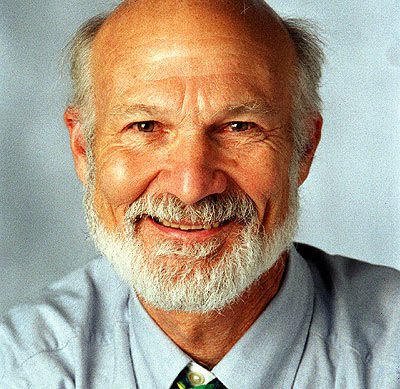
Hannah's Child, a memoir by Duke Divinity School's
Stanley Hauerwas. Hauerwas, a native Texan who taught at Notre Dame before landing at Duke, is the kind of theologian who defies the usual categories.
He's a bundle of paradoxes, actually: a conservative liberal, an iconoclastic traditionalist, and a famously profane pacifist.
In other words, like a lot of us.
And the book was a compelling read. If you're interested in theology, Methodism, university politics or you are a fan of memoirs, I highly recommend it.
Yet reading Hauerwas' story takes me back to the time he spoke at
Asbury Seminary while I was a student there. I think it was 1989.
Now you need to know a little bit about inter-seminary rivalries for this to make sense. Asbury has always been a bit of a renegade school in its relation to Methodism: more conservative in its theology, more focused on the grooming pastors rather than scholars, and more interested in its independence than its connection to a major university.
In sum, pretty different from Methodist divinity schools on the campuses of Emory, SMU, and, especially, Duke.
So when Hauerwas came to address our student body, I wanted to make sure that we made a good impression.
As part of the chapel service that morning, Asbury installed a number of new professors. For
that piece, each professor had to affirm his or her support of the Statement Of Faith of the school -- to teach at Asbury, you have to affirm what Asbury believes. Not in a legalistic sense, but to ensure that all in leadership at the school are on essentially the same page. You can read that Statement Of Faith
here.
And that's when Hauerwas blew me away. He took the platform immediately following the installation / affirmation and said something along these lines to the people of Asbury:
You don't know how lucky you are to have a community with a common tie like that Statement Of Faith. Agreeing to the same truths is at the heart of what it means to be a community of faith. I long for something like that.Wow. A guy from Duke -- a place which, like many other university-based schools of theology, would regard a Statement Of Faith as too "narrow" or "limiting" -- lauding our common standard at Asbury?
It helped me realize that when it comes to theology, real academic rigor stems from taking a coherent stand on significant issues.
It awakened me to the privilege I had to study in a community of people with like minds and open hearts.
It's good to name and declare what you believe. Whether you are a seminary, theologian, or congregation.
Here's our summary at Good Shepherd:
ABOUT GOD
God is the Creator and Ruler of the universe. He has eternally existed in three personalities: the Father, the Son and the Holy Spirit. Love constitutes the essential being of God.
(Genesis 1:1, 26, 27, 3:22; Psalm 90:2; Matthew 28:19; I Peter 1:2; II Corinthians 13:14)
ABOUT JESUS CHRISTJesus Christ is the Son of God. Jesus lived a sinless human life and offered himself as the perfect sacrifice for the sins of all people by dying on a cross. He arose from the dead after three days to demonstrate his power over sin and death. He ascended into heaven and will come again to judge the living and the dead, and to reign as King of Kings and Lord of Lords.
(Matthew 1:22,23; Isaiah 9:6; John 1:1-5; 14:10-30; Hebrews 4:14,15;
I Corinthians 15:3,4; Romans 1:3,4; Acts 1:9-11; I Timothy 6:14,15; Titus 2:13)
ABOUT THE HOLY SPIRITThe Holy Spirit is co-equal with the Father, and the Son. He is present in the world to make people aware of their need for Jesus Christ. He also lives in every Christian from the moment of salvation providing power for living, understanding of spiritual truth, and guidance in doing what is right.
(II Corinthians 3:17; John 16:7-13; 14:16,17; Acts 1:8; I Corinthians 2:12, 3:16;
Ephesians 1:13; Galatians 5:25; Ephesians 5:18)
ABOUT THE BIBLEWe believe that God inspired the composition and collection of the old and New Testaments. Therefore, the Bible has full truthfulness and authority. The Bible is the only infallible rule of faith and practice for the church. The Holy Spirit preserves and protects God's Word in the church today and by it speaks God's Word to peoples of every age.
(II Timothy 3:16; II Peter 1:20, 21; II Timothy 1:13;
Psalm 119:105; 160, 12:6; Proverbs 30:5)
ABOUT SALVATIONWe believe that apart from salvation in Jesus Christ, people are lost and their eternal souls are in peril. We believe that people receive salvation and reserve their places in heaven through faith in Jesus Christ not by good works (Ephesians 2:8-9). Human beings have their sins forgiven through accepting Christ's sacrifice on the cross. We further believe that those who do not accept Christ are separated from God eternally after their death - another name for that separation is hell.
(Romans 6:23; Ephesians 2:8-9; John 14:6, 1:12; Titus 3:5; Galatians 3:26; Romans 5:1)
ABOUT THE RETURN OF CHRISTWe believe that at some point in the future, Jesus Christ will return in full glory and triumph. There will be a bodily resurrection of all persons and final judgment to both eternal reward and eternal punishment. God will have ultimate victory over Satan and will establish a perfect kingdom in a new heaven and a new earth.
ABOUT METHODISMWith our Methodist brothers and sisters around the world, we claim the historic distinctives of Wesleyan faith: prevenient grace, free will, personal & social holiness, and assurance of the believer, and a connected church.