X

Talbot Davis

Uncategorized
The Past, The Present, And The Mercy
July 22, 2015 at 3:14 am 0
William Faulkner  once famously noted, “The past isn’t dead. It isn’t even past.” I wonder if he ever spent time in my office. People bring a lot of baggage from their past that ends up poisoning their present. Both things done to them and things they’ve done to themselves. Sometimes I despair of helping people break free of the hold that the past has on them. Which is why as both a pastor and a pilgrim, I’ve got to hold on to Paul’s testimony in I Timothy 1:13: “Even though I was once a blasphemer and a persecutor and a violent man, I was shown mercy because I acted in ignorance and unbelief.” Think of all the words you could substitute for blasphemer, persecutor, violent mandrug addict, gang banger, adulterer, abuser, victim. Those words matter much less than the ones that follow: shown mercy. That’s what I need when I become mired in my past. Perhaps you do as well. Mercy that’s undeserved and unending. So with that mercy as our fuel, perhaps we may be able to prove William Faulkner wrong after all.
CONTINUE READING ...
Uncategorized
Top Five Tuesday — Top Five Pitfalls Of Pastoral Ministry
July 21, 2015 at 3:33 am 0
After over 25 years of full-time pastoral ministry, I believe I have a reasonably good understanding of how it works. Or how it doesn’t. So what are those things that a pastor needs to avoid if he or she will have both an effective ministry and a vibrant spiritual life? Here are some thoughts . . . 1. Listening Too Closely To Your Critics. And To Your Fans. The reality is that most pastors are neither as “bad” (or sinful or heretical or egotistical) as their critics claim. Neither are they as “good” (or holy or impactful or humble) as their fans declare. Making ministry decisions or deriving personal identity based on the words of either group is asking for trouble. 2. Acting On Impulse. Most major mistakes of my time in ministry have occurred when adrenaline got in the way of wisdom. 3. Fear Of Failure. On the other hand, my tendency towards vacillation when it comes to big picture items has not served the church well. 4. Reading The Bible Only For Sermon Prep. Our recent Text Message series was a revelation for me and in me. It got me reading Scripture out loud every day. It’s the best way I’ve found to meditate on God’s word in a fashion that has nothing to do with Sunday’s sermon. 5. Lack Of Personal Generosity. I know of pastors who seldom give or give very little to the churches they serve. Wow. How can you grow a generous church without making that personal commitment as a leader?
CONTINUE READING ...
Uncategorized
What The Creed Says . . . And What It Doesn’t Say
July 20, 2015 at 3:39 am 0
I love the last line of the Apostles’ Creed: [. . . I believe] in the resurrection of the body and the life everlasting. Amen. While the Creed may not have the same level of authority as inspired Scripture, it nevertheless represents the best of the collective wisdom of early Christians. And they described our eternal hope as “the resurrection of the body and the life everlasting.” Interestingly, they did not describe it as “the immortality of the soul.” One of my most significant learnings of recent years is the discovery that Christianity is much more about the resurrection of the body than it is about the immortality of the soul. Check especially I Corinthians 15. The whole chapter.  You'll see that life after life after death was a more pressing concern for Paul than merely life after death. It’s in the Creed. It’s in Scripture. It’s in the way the ancient mind worked.
CONTINUE READING ...
Uncategorized
Some Random Wonderings
July 16, 2015 at 3:17 am 0
I doubt anyone can give a definitive answer to these questions, but here's what I've been pondering recently:  
  • Why am I just now realizing what a good writer Stephen King is?
  • Why do people turn the fans on full blast at the Y?  People: you're going there to sweat!
  • Why does South Carolina build or expand its roads so much more quickly than North Carolina?
  • Why do so many people put apostrophe's in the wrong places?
  • Why do so many Christian denominations fund their own insurrections?
  • Why have I had to wait over fifteen years for the next Don Henley album?
  • Why do some people drive cars that are worth more than their houses?
  • Why the Kardashians?
  • Why is the book almost always better than the movie?
  • Why don't more Methodists connect the dots?
 
CONTINUE READING ...
Uncategorized
How John The Evangelist Is Like John The Irving
July 15, 2015 at 3:25 am 0
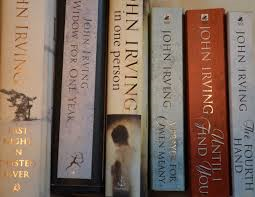
One of my favorite novelists is John Irving. John Irving He's the author of books that are both critically acclaimed and wildly popular, such as The Word According To Garp, A Prayer For Owen Meany, and The Cider House Rules. Irving books 2 Most Irving novels blend high hilarity, deep pathos, and improbable plot twists to craft narratives that are both entertaining and enriching. And he's known for something else:  he writes the last sentence of his novels first.  Once that wording is set, the rest of the novel is ready to take shape.  In fact, that process drives The Last Night In Twisted River, one of my favorite Irving novels of all. And I can't help but think that what works now for John Irving worked earlier for John the author of the Fourth Gospel, also known as John The Evangelist. In John 20:31 -- not exactly the last sentence, but pretty close, especially if John 21 is a sort of appendix to the rest of the book -- John very clearly states his reason for writing Jesus' story: 31 But these are written that you may believe[a] that Jesus is the Messiah, the Son of God, and that by believing you may have life in his name. Everything John includes, then, is for that singular purpose: that you might believe and that by believing you will have life in his name. I can imagine the inspired author getting that sentence down on paper  parchment, sitting back, and exclaiming, "I've got it!  Now that I know why I'm writing and where the story is headed, that will determine what I'll leave in, what I'll leave out, and what hints I'll drop along the way." And those "hints along the way" interest me for this post in particular.  On Tuesday, a friend and I were continuing our study of John (this is why being a pastor is such a good gig), and as part of the prelude to the Lazarus story, we read these words in 11:14-15: 14 So then [Jesus] told them plainly, “Lazarus is dead, 15 and for your sake I am glad I was not there, so that you may believe. But let us go to him.” I've been reading John for 35 years; I've known 20:31 is the thesis statement for 25 years, and yet I'd never noticed that bread crumb John drops through Jesus in chapter 11:  so that you might believe.  On Tuesday, reading it out loud and in community, it literally leaped off the page at me. It's what John Irving's readers would call a foreshadow. It turns out John the Evangelist leaves similar clues throughout his gospel: John 3:15 (often overlooked because of his big brother, the 3:16!):  14 Just as Moses lifted up the snake in the wilderness, so the Son of Man must be lifted up,[b] 15 that everyone who believes may have eternal life in him.”[c] John 5:24"Very truly I tell you, whoever hears my word and believes him who sent me has eternal life and will not be judged but has crossed over from death to life. John 19:35:  "The man who saw it has given testimony, and his testimony is true. He knows that he tells the truth, and he testifies so that you also may believe." And in case we miss the pattern and the purpose,John makes the same declaration in letter form in I John 5:13I write these things to you who believe in the name of the Son of God so that you may know that you have eternal life. When you write that last sentence first everything else in the story falls into place. It's true of novels.  It's true of Gospels.  And, in many cases, it's true of sermons as well.      


CONTINUE READING ...