
X

Talbot Davis

Uncategorized
When Therapy Becomes Theology In The UMC’s Full Inclusion Debate
March 5, 2014 at 2:00 am 14
It happened again.

I heard about a clergy colleague -- long considered to be on the conservative end of the theological debates roiling the United Methodist Church -- who has reconsidered his support of our denomination's official stand regarding same-sex intimacy, ordination of non-celibate gays, and same-gender marriage, and now endorses what is called "full inclusion." 

(Forty years' history in a paragraph: the UMC officially teaches that homosexual intercourse is "incompatible with Christian teaching" and therefore does not knowingly ordain non-celibate gay pastors and does not allow its clergy to officiate at same-sex weddings.  A vocal and persistent minority advocates to change that official teaching.)

Back to my clergy colleague and his change-of-mind on this fraught-with-emotion issue.  How and why did the change take place?  Answer: when he heard the stories of family members involved in same sex unions and raising children in same-sex families.  The pastor looked them in their eyes, engaged in their narratives, found their love persuasive, and so reached a general conclusion from that particular moment:  I/We have been wrong all along about celibacy in singleness & faithfulness in heterosexual marriage. 

On the one hand, my colleague's response is perfectly understandable, even predictable.  I say that because of clergy training:  we in the UMC world have been trained through Clinical Pastoral Education and seminary counseling courses to be reflective listeners

We maintain eye contact.  We listen well.  We lean forward. We repeat back what we are hearing.  We say "sounds like" as often as we can.  We listen with empathy and without judgment.  We immerse ourselves in the stories we are hearing and rarely, if ever, offer directed advice.  Any seminary-trained, CPE-drenched pastor knows exactly what I'm talking about and has done this kind of ministry hundreds of times.  And in most cases, particularly as we help people navigate family dysfunction and personal trauma, that posture of reflective listening is perfectly appropriate.

However, when therapy turns into theology, something else entirely happens:  our experience and our empathy determine our doctrine.

I've been in those counseling sessions.  Asked to officiate a same-gender wedding.  Invited to bless a same-gender union.  And the pastor in me longs to tell folks what they want to hear, yearns to affirm the narrative I'm privileged to be part of.

And yet over against that personal, pastoral desire, I hear another question:  have we become so good at empathetic listening that we have lost the capacity for critical thinking?

Because it seems to me that the role of the Scripture has been precisely to guard against what so many of us now do in elevating personal experience to the level of revealed truth.

Theologically, then, Scripture protects us from ourselves. Which is why Paul tells Timothy:

For the time will come when people will not put up with sound doctrine. Instead, to suit their own desires, they will gather around them a great number of teachers to say what their itching ears want to hear.

Or why Jeremiah declares:  The heart is deceitful above all things and beyond cure.  Who can understand it?

Personal experience and individual feelings -- even when others share those experiences and feel those feelings -- are among the weakest of rationales for shifting theology and changing doctrine.   

The reason the church does theology and arrives at doctrine is to protect us from our natural tendency to turn what we feel into what we believe.

So what does all this mean both for local church ministry at a place like Good Shepherd and for denominational level teaching in the UMC?

Well, I'll always be a pastor and my instincts will be therapeutic.  People from all kinds of backgrounds and even sexual identities will continue to find a home at Good Shepherd.  The atmosphere the people have created here is why so many same-sex attracted people attend and serve in a congregation which continues to teach "celibacy in singleness and faithfulness in heterosexual marriage."

We pray the revelation of Scripture helps to keep our ministry balance and our pastoral theology intact, and we find Scripture's truth to be compelling in spite of its inconvenience and unpopularity.  Or, maybe, because of it.



CONTINUE READING ...
Uncategorized
Top Five Tuesday — Top Five Steely Dan Songs
March 4, 2014 at 2:00 am 0
No one ever said Steely Dan was a normal band.

Two guys from New York.  Neither one a great singer.  A style that mixes jazz, pop, rock, and reggae.  Lyrics that are irreverent, elusive, and oh-so-70s.

When I saw them at Blockbuster Arena; Verizon Wireless Amphitheater; PNC Music Pavilion here in Charlotte in the 90s, they didn't even do that which is in my opinion their best song (for that see below, #1).

Yet I still like them.  Maybe that's because the Eagles liked them enough to include them in the Hotel California lyric:  "they stab it with their steely knives but they just can't kill the beast . . . "

Or maybe it's because they're clever, inventive, and completely unique. 

Whatever the reason, here are my top five Steely Dan songs:

5.  Kid Charlemagne.  The title song from the one Steely Dan cassette tape I owned in 1977.  I think I even bought this one from the old RCA Music Club -- six tapes for a penny!  Remember that direct marketing ploy?


4.  My Old School.  Guadalaraja won't do, but why not?


3.  Hey NineteenSo inappropriate on so many levels.  Marijuana, tequila, seduction of a girl the singer hopes is 19.  But the harmonies are . . . intoxicating.


2.  Rikki Don't Lose That Number.  This hypnotic piece is why a whole lot of people named "Ricky" think I'm odd.  (Because out of nowhere I'll urge them not to lose that number.)


1. Reelin' In The Years.  Great, great song driven by some superlative guitar work.  Which makes its no-show at that mid-90s concert all the more baffling.


CONTINUE READING ...
Uncategorized
Where Doubt REALLY Comes From
March 3, 2014 at 2:00 am 0

I have known for several years that on some level behavior precedes doubt.

In other words, we don't arrive at our shadow of doubt by objective analysis of relevant facts; most of us instead begin to act a certain way and then circle back around and develop some doubts to substantiate that behavior.

We don't think our way into doubting.  We (mis)behave our way into it.

It's the kind of thing Psalm 14 teaches if you take the time to dig.  So I dug.  And along with that study came some wordsmithing that I believe greatly improved on the concept, leaving the bottom line for Doubt's Big Bang here:

Doubt justifies disobedience but surrender magnifies understanding.

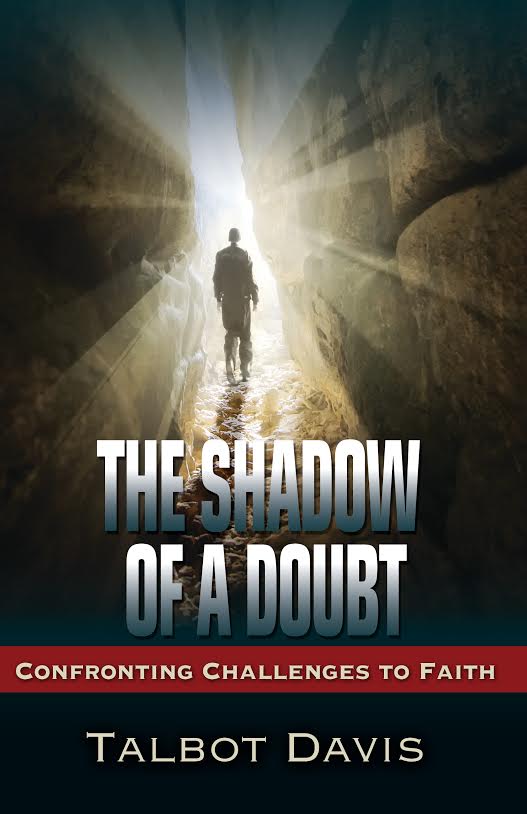
Here's a working manuscript of the message . . . week four in The Shadow Of A Doubt.

----------------------------------------------------------------------------------------------------


We like finding out where things come from, don’t we? The originsof things.  My gosh, that question is the source of some of the human race’s most intense scientific speculation:  where did the world (and the universe it’s in) come from and where did our particular human species come from?  And scientists have reached some kind of consensus that in recesses of time there was actually a BIG BANG that is ultimately the source, the origin, of all we seen.  Agnostics give that BB a scientific explanation; people of faith tend to say more simply: God spoke – BANG – and it was.  But we’re interested in all kinds of origins. On things bad and good; ugly and beautiful. Where did the HIV virus originate?  Where the beauty of a monarch butterly originate?  Where do mosquitos come from? (Wetlands!)

            And on the more positive side, what parent hasn’t dreaded that moment when your 8 – 11 year old turns and asks, “where do babies come from?”  We’re interested in origins; we like to know where things ultimately come from. But have you ever wondered where doubts come from?  Their origins?  What is the BIG BANG that tends to produce doubts.  I mean, we all have some level of doubt – it’s why this thing is call the Christian faith, not the Christian certainty.  But where do they start?  Whether it’s the kind of doubts & uncertainties that I’ve decided I can live with – what’s the deal with dinosaurs? what about people who never hear about Christ? – or the kind of doubting you may have seen or gone through in college.  You know, where the college prof of philosophy or comparative religion was so smart, so shrewd, and they had a knack for chopping the Xn faith of their students right down.  You knew at some level you weren’t educated or mentally agile enough to engage in debate and so your faith felt like it was perpetually stuck in a 2nd grade SS class:  why do you believe?  Because my parents did.  Hard to measure up.  Where do those kind of sophisticated, superior doubts come from? 

Or even, worse, the kind of doubt you may have seen or lived where you ultimately decide, “nope, that’s not me anymore.  I used to believe a little but no more.”  Where do those doubts come from?  And will locating doubt’s BIG BANG in any way help us to stop dwelling in its shadow and move beyond it?        

Which may make Psalm 14:1 seem like an odd place to answer those questions, beginning as it does with more than a little aggression: 

  The fool[a] says in his heart,
    “There is no God.”

  OK, so from the perspective of biblical wisdom, disbelieving in God’s existence or living like you do is the apex of arrogance & folly.  And given our image of the super-intellectual doubter – people like Richard Dawkins (AV), Carl Sagan (AV), and Christopher Hitchens (AV) – you might think the next line in Psalm 14:1 would be:  he sits in the ivory tower and writes books or he hangs out with East Coast elites & pontificates at trendy bars or he corrupts the minds of young collegiansor he weighed all the options carefully and still made the wrong choice or he dug for bones for a living and became convinced there was more evidence for dinosaurs than for God.  I mean, really, that’s our expectation for a description of how it happens that a person comes to believe in his heart there is no God. 

Except that’s not what comes next in Psalm 14:1.  Instead, look at 14:1b&c: 

They are corrupt, their deeds are vile;
    there is no one who does good.


Ahhh, the Psalm goes immediately to deeds.  What people do; how they act, how violence and revenge govern their interactions.  And then the Psalm becomes incredibly comprehensive in 14:3: 

All have turned away, all have become corrupt;
    there is no one who does good,
    not even one.

By the way, Paul in writing the NT book Romans uses this Psalm & this verse in particular from to articulate a compelling argument on our sin nature. It’s where we get the term “Original Sin.”  Yet from the perspective of the Psalm’s logic, it’s almost like it works backwards.  These deeds, this corruption, that totality of sin piles one on top of the other, act upon act, and finally the perpetrator – the one Psalm 14 calls the fool – decides, “Nope! There is no God.”  See, I look at the way the logic flows, I look at what it DOESN’T say and the conclusion is inescapable:  the disobedience, the behavior, the sin, the deeds come first and then the doubt follows.  We don't come by our doubts innocently.

It’s very rare that people explore all the options and come to a head-only belief that there is no God, or at least one who is remotely interested in what we do.  It’s much more common that people behave in a certain way, adopt a frankly self-centered mode of living and then, as if to substantiate it, decide and declare that any God who might possibly disapprove simply does not exist.  Here’s how it circles back around:  Doubt justifies disobedience.

It’s a pattern I’ve noticed in atheists FAMOUS & ANONYMOUS.  You investigate their back stories and it is almost never an unbiased review of evidence that led to their conclusion; it starts with a behavior, a pattern, an outlook that gets settled deep inside the person and THEN it becomes, “oh, I don’t believe in the God who didn’t want me to do that thing.”  Doubt is to justify what you are already doing.  Remove God, remove guilt, remove accountability, remove correction.  You remove God so that you can become one.  And then do as you please.  I’ve seen it all over, even in church.  Money, sex, anger seem to be the primary areas.

Lord, in our denomination we have a whole collection of church leaders in other parts of the country who’ve decided they are smarter than the bible when it comes to sexual boundaries.  It’s not the doubt of atheism like Ps 14, but it IS the doubt the can cause you to decide the bible not longer applies.  And these leaders & teachers often couch their suddenly-smarter-than-the-bible position in terms of helping others, extending love. Yet when some of the stories go a bit deeper you discover, “Nope.  There’s quite a bit of self-interest involved.  People want to indulge themselves in the smarter-than-the-bible sexuality and STILL keep their jobs.”  Doh! Less principle & more convenience.  Doubt justifies the disobedience that's already going on.   GS: I may be a know-it-all, but I am not smarter than the people who wrote the bible when it comes to boundaries for sexual intimacy.

I tell you all that to say this:  if you are harboring doubts, if you are thinking of leaving the faith because of questions you have, what’s REALLY going on?  What’s HONESTLY behind it all?  Is it the desire to spend your money as you wish and not as some 3000 year old text commands you to?  Is it the anger you want to express, either physically at those you love or digitally at those you hate?  Is it the affair your contemplating, the one you’re having, the one that just ended?  Are you truthfully, honestly, like the nervous guy who came to the confessional booth one time & blurted out, “My sin is full of life!”  Will you be honest enough to acknowledge the sort of selfish, mostly based origin of all those doubts?  Will you take that kind of personal inventory?  It’s not that you truly don’t believe in God, you just want to remove God so you can become one . . . do whatever . . . the hell . . . you want to do.  Doubt justifies disobedience.

However. Except. But.  We’re not at the end of Ps 14 by a long shot.  Look at 14:6: 

 You evildoers frustrate the plans of the poor,
    but the Lord is their refuge.

The strong-armed atheists of this Psalm don’t know that the people who APPEAR weak & humble & pitiful actually have the Lord on their side.  And in that refuge there is a marvelous combination of strength & clarity; look at 14:7: 

Oh, that salvation for Israel would come out of Zion!
    When the Lord restores his people,
    let Jacob rejoice and Israel be glad!
 
So there is coming a time when oppression against believers ceases and faithful people KNOW the source of their deliverance.  Not the BIG BANG of their doubt, but the BIG BANG of their deliverance!  They’re given the insight here to see below and beneath the surface events – why it is that seemingly wicked people prosper on earth – and into the heart & will of God.  You know what that means?  Doubt [may] justify disobedience but Surrender Magnifies Understanding. 

Yes!  Sometimes you’ve got to DO in order to KNOW.  You follow the instructions / the commands / the teachings without complete clarity and along the way you discover:  “Oh, I get it!  That’s why he says to live this way!”  It’s the pattern of the entire bible!  Abraham: Go. Leave your family, your property, your business, your 401K, and go to a land you don’t know.  Lord, can I have the agenda for the trip?  No, just go.  Along the way you’ll understand.  And so he did.  Moses, take your people and get out of slavery on the other side of the Red Sea.  Do what I say and leave now.  And Moses answers, what’s the plan? what shall I tell them? Tell them my name and who I am and that’s enough.  Along the way, you’ll understand.

And Jesus to Peter, the fisherman son of a fisherman.  Peter, come follow me and I’ll make you fishers of men.  Peter: whose keeping the books? (Judas!) Whose your right hand man? What’s the plan?  When you coming back?  Jesus answers: Not for you to know the times and seasons, Peter, just come with me and you’ll discover along the way.  People:  they all followed FIRST and comprehended SECOND!  As if it is “Oh, once I did THIS, I got THAT!”  And it hasn’t stopped being true!

True with generosity.  What would more strengthen your doubts than this archaic OT notion of 10% going to God and then a NT crew of people who gave MORE than that.  It’s so tempting to say, “I don’t believe in a God who would ask THAT! Doesn’t he know I’ve got taxes, alimony, insurance?”  Yet I hear from those of you who follow on this – word after word after word – and you say “I did it and it WORKED! I understand!”  Goodness, in our own house we’ve been committed to some NT levels of giving for years and my wife’s company was sold to Private Equity. Everybody around Julie lost their job. Except her. No explanation. But God. REFRAIN.

Or in the realm of sexual intimacy.  Talk about an area where people want to doubt so they can justify behavior.  But then, I run across these exceedingly odd yet inordinately blessed couples – young adults and middle age! – who wait and they realize that abstinence BEFORE marriage reinforces fidelity AFTER it.  Oh! This command that cramped my style ended up saving my life!  I get it now!  Oh, the same is true with how you express your anger, how you refrain from gossip, how you bless people you could manipulate.  Just because you think it doesn’t mean you must say it.  Just because you can doesn’t mean you should.  You show your relational power by restraining it . . . and then God lets you know this is why it works better. It’s just like Jesus.  REFRAIN.

Oh if you’re in the middle of a season of doubt, surrender to that which you do not fully understand.  Follow first, and comprehension will come.  Because here’s what I truly believe happens when you surrender to that inconvenient, unpredictable, madly-in-love-with-you Savior:  you start on a road in the dark but the longer you walk, follow, and submit the more clear become the ways and will of God.  And you’ll experience the BIG BANG not of doubt but of your own living relationship with Jesus Christ.


 (With that last paragraph, our worship team prepared a video that actually moved along that dark road into a gradually and then blindingly bright light that said:  UNDERSTANDING.)
CONTINUE READING ...
Uncategorized
Doubt’s Big Bang
February 28, 2014 at 2:00 am 0


The sermon is NOT about creationism, evolution, or intergalactic science.

It IS about a BIG BANG, however.

The Big Bang of doubt.

What is the origin of doubt?  Where does it come from and what keeps it going?

When you answer that -- and we will on Sunday and I promise that the answer will surprise you -- you are so much better able to deal with the doubts that remain in your faith.

To prepare, I invite you to read Psalm 14 . . . but don't be fooled by its apparent simplicity.

Can you tell I'm looking forward to this one?

Doubt's Big Bang.

Sunday.

8:30. 10.  11:30.
CONTINUE READING ...
Uncategorized
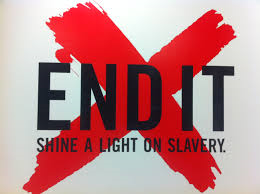
End It 2014
February 27, 2014 at 2:00 am 0


This February 27th, join us and other Freedom Fighters from around the world as we SHINE A LIGHT ON SLAVERY.

Draw a RED X on your hand.

Tell your world that slavery still exists and YOU WON’T STAND FOR IT.

Just use your influence any way you can to help us carry the message of FREEDOM so even more people know.

Let’s make this SHINE A LIGHT ON SLAVERY DAY even brighter than ever.

For more, click here.

 
CONTINUE READING ...