
X

Talbot Davis

Uncategorized
The Social Solitude Of Preaching
July 10, 2014 at 1:00 am 0
Preaching is an intensely solitary activity.

Preaching is a thoroughly social exercise.

Which is it?  Solitary or social?

Yes.


My own process of preparation is wholly wrapped in solitude.  I study, I jot, I brainstorm, I fret, I pray, I get excited, I become depressed, I write . . . all on my own.  At my desk in the office or at my dining room table at my home.  The only input I get during that process is some occasional wordsmithing advice I receive from trusted friends.

And while I work several weeks in advance, I still need to prepare a message almost every week.  And until the last word is written and the printed sermon is in the "hopper" . . . I'm not terribly social around the office. But when it's done . . . I'm full of high fives, stop-by-your-office-to-shoot-the-breeze, and the casual conversations that make working environments worthwhile.

So sermonizing is inherently solitary.

But sermon delivery is by definition social.  (Unless attendance at Good Shepherd declines to zero, something I don't have much interest in being part of.)

There is a gathered community.  I see responses -- or lack thereof -- on people's faces and in their posture.  Some register the "a-ha! I never knew that before!" look that lets me know I have engaged their mind. Others betray the "that hit close to home" look that lets me know I have engaged their heart.

The preaching event is, as I shared earlier this week, a shared journey towards a common destination.  We in the room do it together, and if we do it well people don't feel I'm preaching at them but preaching with them.

So: solitary preparation leads to social delivery.

It's why some of the best preachers you've ever heard are inescapably introverted in their personal lives.  And it's also why a few of the "hail fellow well met" types can't preach their way out of a paper bag.

And it's all part of the ambiguity that makes preaching an endlessly fascinating endeavor at Good Shepherd.

CONTINUE READING ...
Uncategorized
“Stairway To Heaven,” The #UMC, And The Meaning Of Words
July 9, 2014 at 1:00 am 2
Of all the anthems in rock music, one is just a little more anthemic than all the rest:


Weren't the 70s great?

Yet there's one line in Stairway that seems to have special relevance these days:

"'Cause you know sometimes words have two meanings."

Yes, they do.  And in the myriad of debates rising up in the United Methodist Church, sometimes words have more than two meanings.  Or, more to the point, sometimes words get "re-gifted" with brand new meanings far beyond the scope of their original meanings.

Actually, it's not a new phenomenon.

For example the word resurrection historically meant that Jesus literally, bodily got up out of the grave on the first Easter morning.  And his resurrection is a first fruits on what would happen to the bodies of his followers upon his return to earth. However, the early 20th Century saw the word resurrection redefined to a more subjective place: Jesus rose, not because his body resurrected, but because his spirit infused the original disciples.

Or how about the word love?  Biblically speaking, agape love has always been about serving the deepest needs of the recipient of that love.  Which can mean, of course, that the most loving thing for the recipient of love is not always the nicest thing or the easiest thing.  Now, it seems, love has been redefined as endlessly permissive.

Or even orthodoxy.  For two millenia orthodoxy -- right belief -- has been inextricably linked to orthopraxy -- right practice.  The thought that one could believe all the creedal truths about Jesus (which I'm all for!) and then embrace an evolving and permissive sexual ethic would have been inconceivable to the ancient authors of orthodoxy. 

Yet I have on more than one occasion have my hand slapped for calling those of us who wish to "conserve" heterosexual covenantal monogamy in the UMC the "orthodox" group.  So I've relented and we're now "conservers." 

More recently, there is biblical obedience.  You'd think that would involve adherence to the plain teaching of Scripture, the collective witness of the church for the better part of 2,000 years, and the wisdom of the most highly regarded contemporary scholars like N.T. Wright, Ben Witherington, and Richard Hays, right?  Not anymore.  The phrase biblical obedience has been reimagined to mean something very different in United Methodist circles these days.  Check it out here.


And the final word that has two meanings?  Not.  As in, in the language of our church, Therefore self-avowed practicing homosexuals are not to be certified as candidates, ordained as ministers, or appointed to serve in The United Methodist Church.  Well, the word "Not" evidently has two meanings to the Bishop of the Wisconsin area; read all about it here.

And yes, it makes me wonder . . . 


CONTINUE READING ...
Uncategorized
Top Five Tuesday — Top Five Pink Floyd Songs
July 8, 2014 at 1:00 am 3
Oh why not?


Laser light shows, absurdly long songs, lyrics leading to nowhere, band-on-band smackdown as young rockers became old men . . . all of it is part of the Pink Floyd schtick.

And I went through a phase where I listened to them often and liked them a lot.  So here goes:  my Top Five Pink Floyd songs, like, ever.  (And no, The Wall is not allowed on the list.)

5.  Eclipse, the closing track of The Dark Side Of The Moon.  It's almost not even a song, but it sure is pretty.


4.  Welcome To The Machine.  It's the kind of dystopia people envisioned in the 70s.  Think they knew we'd be connected to our smart phones?


3.  Pigs.  Who names an album Animals?  And who has the best song called Pigs?   With sound effects?  For eleven minutes?  Well, a band who marketed their music to 70s teenagers who parted their hair down the middle, that's who.


2.  Mother.  I have always loved this piece with the delicate music and devastating lyric.


1.  Wish You Were Here.  I learned it slow-motion on the guitar.  Gorgeous stuff when someone who really plays does it well.  Like here:


CONTINUE READING ...
Uncategorized
A Sermon Map
July 7, 2014 at 1:00 am 0
As I have been thinking about sermon design recently, I stumbled across some language that helps me map them out.

Journey  --  Discovery -- Destination -- Application

This is probably nothing original with me, but it is some language that makes sense.

And before I go further:  in the old days (1990s?), I operated on the tried-and-true three (or four) points method of designing a sermon.  Then, getting a grateful introduction to Andy Stanley's Communicating For A Change, I morphed into the

ME
WE
GOD
YOU
WE 

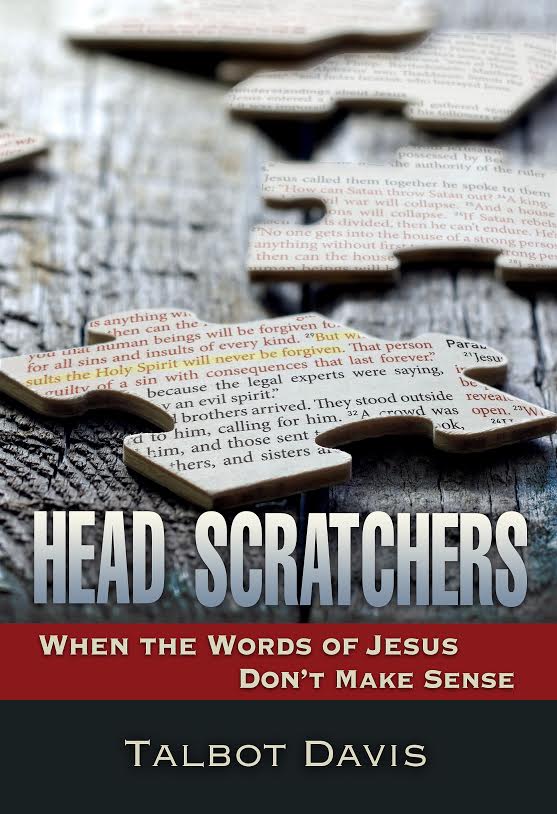
design that leads to one point and emphasizes it repeatedly.  And by and large, that is still the model I follow.    One notable exception was the just-completed Head Scratchers series in which the shock & confusion of Jesus' sayings were jumping off point for the sermons.  It was such fun because it was so unusual.

But back to today:  Journey.  Discovery.  Destination.  Application.

Journey.  This is the part of the sermon where I hope to get as many people "on board" with me as possible.  It's almost like a tram at Disney -- the tram stops at different locales in the parking lot, on-boards the guests from that particular place, and then takes them to the common entrance.  If I get this stage of the sermon right, most people in the congregation will say things to themselves like "Yeah, I felt that way, too!"  Or:  "that happened to me."  Or even:  "Has he been a fly on my wall this week?"

Discovery.  After everyone is "on board," I hope to take them to the "common entrance" -- which is the Scripture passage for the day.  Two things have helped a lot in making the "Discovery" phase meaningful for both preacher and preached at Good Shepherd:  1)  Remind people what the text is saying by what it DOESN'T say; and 2) acknowledge when texts are baffling, confusing, or even I'd-rather-that-one-not-be-in-here.  I've also learned that most folks enjoy a little history lesson and  they appreciate it when you acknowledge that Luke, for example, is not only a theological biographer, he is a literary genius as well.

Destination.  Everyone is on board.  Everyone is in the common entrance, the passage for the day.  From that study and explanation emerges the destination.  Andy Stanley calls it the "bottom line."  We call it the "one pointer."  For me and for the team I work with, arriving at & massaging the wording of the destination is heavy labor.  But it is a labor of love.  Here are a few I feel have had the most sticking power through the years:

You're not MADE to work.  You are Made. To. Work.

What you tolerate today will dominate you tomorrow.

Your desire to escape is Jesus' signal to invade.

Jesus has to conquer his friends before he can finish conquering his enemies.

Application.  What does it look like when people live out this bottom line?  What would it look like for our whole church to do so?  Who do I know who has done this?  Where have I seen it in action?  Who is already giving witness to this truth we've excavated from Scripture?  And finally, what practical, even difficult, homework assignment can we give the people of the church to reinforce our subject today?  All those questions are the raw material for sermonic application.


I guess you could say that I don't want to march "off the map."  I want to preach on it.
CONTINUE READING ...
Uncategorized
Head Scratchers, Week 5 — Do Not Toss What Is Sacred To The Dogs
July 4, 2014 at 1:00 am 0
I am so fortunate to work with a team of people at Good Shepherd who can do things like put weekly, customized, Head Scratchers videos together.

Here's the one for this coming Sunday:


Upon first hearing and first reading, those are some of Jesus' most polarizing and insulting words.

Or are they?

Come help us figure out that particular mystery.

Sunday.

8:30.  10.  11:30.


CONTINUE READING ...