
X

Talbot Davis

Uncategorized
Top Five Tuesday — Top Five Responses To Preaching
July 10, 2012 at 1:00 am 0
We preachers value the responses that people have to our preaching.

After all, most of us didn't go into this so that our words could vanish into thin air, never to be heard, much less considered, again. 

Yet even the best preachers (so I'm told) get all kinds of different responses and reactions to their messages.  Here are just a few . . .

5.  People hear what someone else has said.  At least once a month someone will say to me, "Well, it's like you said in that sermon one time . . . " and then quote something I don't even believe much less ever said.  A few weeks ago it was a version of the "God helps those who helps themselves" that I supposedly preached one time.  I usually smile and nod, and rarely correct.

4.  People hear what more -- or less -- than you said.  On a recent Sunday, someone offered me effusive thanks for words I'd uttered the previous week, saying how much that language had helped her in the intervening seven days.  That same morning, another person let me know in a gentle way that those same words (same section of the same sermon!) brought her some pain and discomfort.  People hear what preachers say through the lens of their own experience and expectations -- and we who preach need to be ever mindful of that reality.

3.  People hear what you say and disregard it.  Oh well.  We just want to make sure that if people do cast what we say aside, they're missing out on something that would have benefitted their lives.

2.  People hear what you say and repeat it back to you later.  Of course, we love it when this happens . . . especially when the "repeat-back" is accurate.  I have found this to be much more the case with a one-point sermon than with my older method of having three or four emphases per Sunday.

1.  People hear what you say and embrace it into their lives.  Tempers get controlled, wallets get opened, marriages get restored, forgiveness gets offered, and salvation gets received.  And that's why we preach.
CONTINUE READING ...
Uncategorized
Is A Sermon Like A Song . . . Or Like Saturday Talk Radio?
July 9, 2012 at 1:00 am 2
What form of communication, exactly, is a sermon? 

Is it written or spoken?  Heard or seen?  Inspirational, educational, or informational?  Is it a work of art or a medium of instruction?

Really, does a good sermon elicit the same kind of response in a congregation as does a good song?  Connecting with mind, heart, and memory? Or is it more like listening to talk radio?  Saturday talk radio with its myriad of instructions on how to make your car ride better, your house stand stronger, and your investments mature faster.  Which is it?

These are loaded questions, to be sure.  Because a good sermon needs to have a piece of all of the elements I've mentioned -- written, spoken, audio, visual, information, and inspiration.

Yet in the way we try to design sermons around here, they do function very much like a song if they are done well.  Think about it.  A song begins with a verse, hopefully one that creates an immediate visual image in the mind's eye of the hearer:

I got the call today, I didn't wanna hear

But I knew that it would come
An old true friend of ours was talkin' on the phone
She said you found someone
And I thought of all the bad luck,
And all the struggles we went through
How I lost me and you lost you
What are these voices outside love's open door
Make us throw off our contentment
And beg for something more?

The role of the verse?  So that hearers will say or think to themselves, "I know what that's like.  I've been there."

So it is with the opening moments of a sermon.  The preacher begins a journey with the congregation and at various points along the way invites people to join him in a common experience.  When I preach, this is most often the "someone here . . . " section of the message.

Back to the song.  A good song has a memorable chorus ... even if you don't know all the verses to your favorite song(s), you know the chorus.  Like this one for me which follows the verse from above:

I've been learning to live without you now

But I miss you sometimes
The more I know, the less I understand
All the things I thought I knew, I'm learning them again
I've been tryin' to get down to the Heart of the Matter
But my will gets weak
And my thoughts seem to scatter
But I think it's about forgiveness
Forgiveness
Even if, even if you don't love me anymore

Choruses that are well done stickThe Heart Of The Matter, Don Henley's song I'm using here, is 23 years old and I'll never forget its plaintive, forgiveness-seeking refrain.

It's the same with a one-point sermon, the type we preach most often at Good Shepherd. After establishing the common ground with the "verse" section and then studying the Scripture for the day to get God's perspective on our shared human dilemma, we try to communicate the salient truth in a way that connects.  That's memorable.  That's sticky.

We even call that point the "Refrain" in preaching.  Coming up with a Refrain phrase that's memorable, faithful to Scripture, helpful to life, and, potentially saving to souls is neither easy nor quick.  It's hard, time-consuming work that's generally worth the effort.   Some of the refrains we've had here recently include:

Jesus exposes who you are so you will discover who he is.

What you hide in order to have will come back to haunt you.

The favorites you play will play you.

What you tolerate today will dominate you tomorrow.

When Jesus builds your house, the upgrades are free.

So there's a reason good music intersects with your spirit and your memory in a way a good edition of "Car Talk" never can.  The verses bring you in and and the chorus brings it home.

We pray the same is true of preaching at Good Shepherd and elsewhere in the kingdom.

---------------------------------------------------------------------- 

Here's The Heart Of The Matter:


CONTINUE READING ...
Uncategorized
Mom Publishes Story
July 5, 2012 at 6:01 am 6
My mother, Betty X. Davis, just published a story called "The Last Bicycle" in the July/August edition of Spider Magazine, a highly regarded periodical for children.

Set in the French town of Uzaire in the waning days of World War II, "The Last Bicycle" weaves together a young boy named Jacques, an American soldier from Texas, and a treasured bicycle into a tale of loss, sacrifice, serendipity, and restoration.

While it is quite an accomplishment to have a short story published anywhere these days, I suppose you could say it's not altogether unique.

After all, lots of people's mothers have published short stories.  I daresay that even some preacher's mothers have published fiction.

What makes this one noteworthy?

The fact that my mother published the story at the age of 96.  Ninety-six.  One hundred minus four. 

As in born in 1915 and getting stories published in 2012.

Actually, I'm not sure how she fits writing into her schedule, packed as it is with tennis matches, speaking engagements, and family gatherings. 

In other words, a daily routine quite unlike any other 96-year-old I've ever heard of.

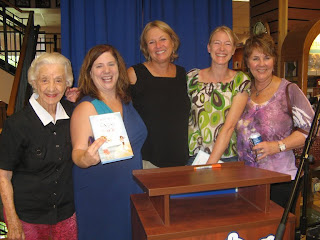
Here she is, at far left of picture, with some of her Texas-based writer friends:

CONTINUE READING ...
Uncategorized
Top Five Tuesday — Top Five 4th Of July Memories
July 3, 2012 at 1:00 am 0
In preparation for tomorrow's annual observance of Independence Day, I thought that I'd take a retrospective look at what the Fourth of July celebrations have been like through the years.

1.  When I was 5 and watching a fireworks show at a local golf course . . . I was TERRIFIED.  I remember crying throughout the entire show, no doubt ruining the experience for my parents, siblings, and anyone else within hearing distance.


2.  When I was 12 and travelled to the Bay Area to compete in national-level tournaments I was . . . FREEZING.  Think of it: I left Texas in July -- meaning daily temperatures of 100 degrees plus.  I had always been told that the west coast was sunny and warm.  And then I arrived in northern California and learned first hand what Mark Twain said:  "the coldest winter I ever had was a summer in San Francisco."  No wonder I played so badly!


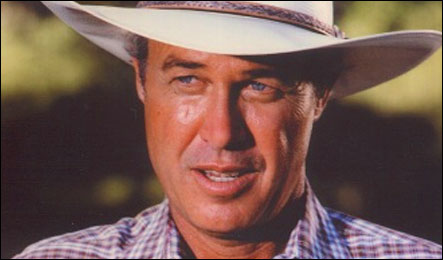
3.  When I was 24 and returned to Dallas for a brief family vacation I was . . . NOSTALGIC.  In the summer of 1986, Julie and I flew from New Jersey for a couple of days in my hometown.  While there, we went to a 4th of July Parade featuring Steve Kanaly, the actor who played Ray Krebs on Dallas.  At that stage, I'd take any celebrity sighting I could get.


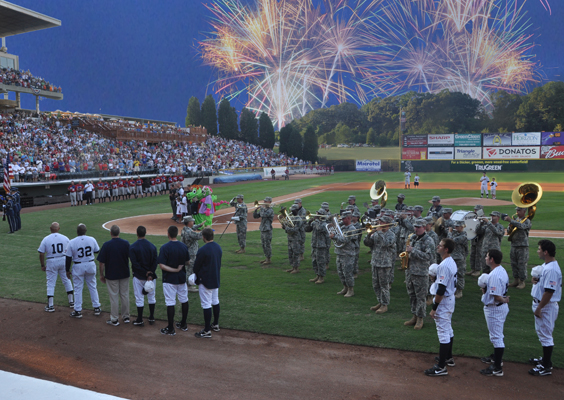
4.  When I was 40, recently moved to Charlotte and celebrating the 4th by going to a nearby Charlotte Knights game with my family I was . . . CLAUSTROPHOBIC.  The stands were packed, the game was minor league, the parking was a nightmare, the heat was oppressive, and the fireworks were underwhelming.  Think that's why we haven't been back for a Fourth since?


5.  When I'm 50 and acting juvenile by shooting fireworks off in the the driveway of some neighbor-friends, I'm . . . CONTENT.  I don't cry at fireworks anymore, I don't have to battle traffic in the subdivision, and I'm in a city that's very much home surrounded by family and friends I love. What could be better?


CONTINUE READING ...
Uncategorized
Sermon, Interrupted
July 2, 2012 at 6:40 am 2
About every twelve months or so, we have a medical emergency during one of the worship gatherings at Good Shepherd.

Over the years, we have had mild strokes, cardiac distresses, diabetic episodes, and fainting spells.

It happened again yesterday at 11:30, as a dear woman lost consciousness just as I began the sermon.

So what do you do as a preacher?

Well, the worst thing you can do is pretend it's not happening.

The best thing you can do is remember your sermon is not the most important thing in the world in that particular moment; helping a woman get restored to health is.

So I stopped the sermon as soon as I noticed the activity around our friend, asked any medical personnel in the room to come forward to offer assistance,  invited the rest of the congregation to pray over the situation, and confirmed that staff had called 911.

The medical professionals in the room were superb -- quick on their feet, unselfish in their attitudes, and professional in their actions.  They stabilized the patient and kept her family calm until the EMS crew arrived.

As part of the prayer, I also invited the people in the room to point their palms towards the ailing woman and those working on her.  Linking a mental activity such as prayer with the physical action of palm pointing seems to help with focus and passion.

A sermon interrupted by a medical emergency is a marvelous opportunity to test what kind of community you are creating.  In this case, the people of Good Shepherd showed themselves again to be a people of prayer, patience, and compassion.  I couldn't be more proud.

The woman's condition stabilized and improved as we prayed.  Eventually, the EMS team entered the Worship Center, placed our Good Shepherd friend on a gurney, and whisked her away to a local hospital where, as of this morning, she rests comfortably.

I remained on the floor (instead of returning to the elevated platform) and delivered a truncated version of the sermon I'd started fifteen minutes earlier.  It was much more casual and conversational than what I had preached at 8:30 and 10:00, but I pray it was a form that fit the moment.

Most importantly for the overall theme of the day, we were still able to hand out our Upgrade CD -- an audio recording of thirteen different people from the church reading the book of Hebrews out loud.  The CD is a way to emphasis Sunday's bottom line from Hebrews 2:1:  The Only Savior Demands The Greatest Attention.

That's a point that remains true -- medical emergency or not.
CONTINUE READING ...