

X

Talbot Davis

Uncategorized
Solutionists, Week 2 — “Let’s Do This”
April 20, 2015 at 3:02 am 0
I am thankful to say that Solutionists seems to be striking a chord with the people of Good Shepherd.  Here's what one friend posted about yesterday's message: Exactly what I needed to hear. I didn't realize it until it made me cry. Another friend put it this way:  You were speaking directly to me and my professional life today. Wow. Those kind of responses are only possible through the Holy Spirit. So here's the message in written form.  Entitled "Let's Do This," it has this as the bottom line: You only get rid of what you refuse to get used to.   -----------------------------------------------------   I bet this happens in your life because I know it happens in mine. Somewhere in your house or your workplace or your car – and for me, it’s the garage – stuff collects. In my case, it’s little slips of paper – receipts, notes, cards – that somehow fall out of the car and onto the floor of the garage. And the first couple of times I see it, I’m in a hurry or cold or trying to evade the cat and I’m like “well, I just get that later.” And then later turns into never and you know what happens, don’t you? I stop seeing it altogether. I get used to it. The dirt, the paper, the mess simple becomes part of the garage scenery and I stop noticing what shouldn’t be there and come to regard it as part of what should. Looks like this (AV hoarder garage!) And I so know that I’m not the only one. It’s why you have piles of useless stuff in your house, why your workspace is out of alignment, why your car doubles as a closet, and why even the tidiest, most OCD of you have a place somewhere in your life that is cluttered, crumbling, messy. Because you’ve gotten used to it. But it’s more than décor, more than garage. It’s life. One of the saddest things for me to observe as pastor is the degree to which people settle, to which they get used to having stuff in their selves or their relationships that they should actually never tolerate. Because as Anthony Abbot said,  life stops hurting so much when you give up dreaming it could be any different. Like I’m quite sure that a few of you here have gotten used to the abuse that happens in your house – verbal, psychological, even physical or sexual. Some of you have gotten used to being abused while others have become accustomed to doling the abuse out. You’ve gotten used to taking in the unnecessary vitriol of others or you’ve gotten used to expressing your vitriol much too freely. No filter between your thoughts and your words. Others here have gotten used to addictive behavior in your family. Either as the one who indulges in it (just a little!) or the one who enables it. It’s just easier to co-exist than to deal with it, so all in all you’ve gotten used to it. On the personal level, some of you have gotten used to a level of ill-health, losing your temper (Well, I’ve GOT this temper so I might as well USE it!), or even hopping from relationship to relationship.   Professionally, some of you who lead at work have gotten used to low-performers and have settled into an equilibrium in which it is easier to co-exist. In my own world, I know that until about eight years ago I had settled on a method of sermon design that was simple but had become stale. Actually, whole churches get used to all kinds of stuff that they shouldn’t. I remember in Monroe, early on in my tenure there, an apparently trusted, wise leader took me aside and gave me a little history lesson. He told how in 1984 he’d had to arrange for that pastor to leave. And then how in 1988 he’d had to do the same to the next pastor, a guy who happened to be extraordinarily well loved in that church.  Then, the same scenario earlier in 1990.  Now it was me and we were fine. I tucked that info away and thought, “ok, history noted, but of course I’ll be different and he’ll ALWAYS love me!” Nope! Six years later he told me it was time for me to leave that church (because Jesus only stayed on earth 3 ½ years & then his humanity started to “show out”; that’s why UMC pastors should move every 3-4 years!). I stayed two extra years just to show him he didn’t have that clout. But you know what the people in the church said about him? “Oh, that’s just _____. We’re used to it.” (Like just get used to that malignant tumor in choking your heart!) You know why that’s on my mind now? Because what do I hear this spring? That he’s at it again! 25 years later! He changed churches, but not patterns, and is in leadership at another church & trying to fire their pastor? Why? Because that guy is trying to make his church just like GS! And another church has gotten used to something that should have never been allowed in the first place.   Which brings us to Nehemiah. As in, the book of Nehemiah. As in, since the bible is a library, Nehemiah is in the memoir section. Here’s the scenario: it’s 445 BC, he is living in the lap of luxury in Persia (Iran), serving the pagan King Ataxerxes although he himself is a Jew. He’s really got it made if you value things like comfort and wealth and don’t put much weight on integrity and history. Anyway, Nehemiah gets a report that Jerusalem, the city of his people and his ancestry, a place he has most likely never visited, is now a city of ruins. It’s been this way ever since the Babylonians ransacked it 150 years earlier. Most particularly, its protective wall is broken and its gates are burned. And for some reason, immediately upon receiving the report, Nehemiah knows what he must do: go to Jerusalem ASAP. Look at 2:3-5: but I said to the king, “May the king live forever! Why should my face not look sad when the city where my ancestors are buried lies in ruins, and its gates have been destroyed by fire?” The king said to me, “What is it you want?” Then I prayed to the God of heaven, and I answered the king, “If it pleases the king and if your servant has found favor in his sight, let him send me to the city in Judah where my ancestors are buried so that I can rebuild it.” Ancestors. History. Part of the people of God and since the city of God is in ruins, the name of God is in disgrace. So after working up all kinds of divine courage (via breath prayers!), he gets his boss King Ataxerxes to grant him FMLA leave so that he can take a four month journey from Persia (Iran) to Jerusualem. Four months just to get there! (He ends up staying 12 years, but I doubt Ataxerxes thought the FMLA was gonna last that long!) Upon his arrival in Jerusalem – remember, a place of his ancestry but a place he himself has never laid eyes on before – look at what he does: 11 I went to Jerusalem, and after staying there three days 12 I set out during the night with a few others. I had not told anyone what my God had put in my heart to do for Jerusalem. There were no mounts with me except the one I was riding on.  Secrecy. Because if any of his reconnaissance, any hint that he wanted to repair and rebuild what had been crumbled for so long – that would have started all kinds of trouble before he started any kind of repair. And after catching his breath for a few days, upon shoring up his physical and emotional reserves with Sabbath, Nehemiah gives the most interesting account in his memoir of what he does next in 2:13-15:   13 By night I went out through the Valley Gate toward the Jackal[a] Well and the Dung Gate, examining the walls of Jerusalem, which had been broken down, and its gates, which had been destroyed by fire. 14 Then I moved on toward the Fountain Gate and the King’s Pool, but there was not enough room for my mount to get through; 15 so I went up the valley by night, examining the wall. Finally, I turned back and reentered through the Valley Gate. Now: can we acknowledge that examining the “Dung” Gate doesn’t sound very appealing? And we also know there was a Hinnom Gate, which was the gate to the city dump, Gehenna, which is where we get the term “hell.” So: Dung Gate and Hell Gate. And we thought we had a problem  with Watergate! Not a great job! But circle that word “examine” in vv. 13 & 15. Other translations use the word “inspect.” But he is so meticulous! Surveying, cataloging the damage to the once-strong gate and once-strong city. Taking the time to see and to record what others have gotten used to. His fresh eyes record what the people of Jerusalem had become numb to! And when I see that part of the memoir, I realize: the Jews living in the midst of their clutter and failure had given up dreaming that life could be any different. They’d settled. They had gotten used to their mess and you never get rid of what you get used to. Whether it’s a garage on Hatton Cross Dr in 2015 or a wall in Jerusalem in 445 BC, the truth is the same: you don’t get rid of what you get used to. Nehemiah’s reconnaissance was the fresh eyes the people of Israel needed to point out what they could no longer tolerate. Because look at 2:17: Then I said to them, “You see the trouble we are in: Jerusalem lies in ruins, and its gates have been burned with fire. Come, let us rebuild the wall of Jerusalem, and we will no longer be in disgrace.” The best word there? We. As in I’m one of you. Remember: he’d been in that place for about five days after growing up 1000 miles north and east! And yet because of ancestry, because of history, because of divinity, it only takes him five days to become a Jerusalemite. His inspection opened not only his eyes but theirs as well, enabled them to see the damage they’d gotten used to. And I love the response in 2:18b: They replied, “Let us start rebuilding.” So they began this good work.   LET'S DO THIS!!  They’re on board! We see it now! We’ll stop tolerating! We’re gonna get rid of what we had gotten used to! And the rest of the memoir is exactly that story, how Nehemiah mobilizes (not monopolizes) the people for ministry and productivity. Because here’s what all us modern day solutionists need from our very first one: You only get rid of what you refuse to get used to. I can hardly tell you how much I believe this – or how vital I think it is in both individual and organizational lives. Know why? I’ve lived it. In 2010 we’d been plateauing for a few yearshere and we brought in fresh eyes. Didn’t know it at the time, but he was our modern day Nehemiah! Told us things like we were “branding the bullet but not the gun”; meaning, our series were killer but the church had no direction. He showed us pictures like this: EMPTY GREETING and EMPTY EXTERIOR WALL SPACE and UNWELCOME PARKIGN SIGN. Opened our eyes to what we’d gotten used to. And now? Well, I happen to think our series still aren’t half bad but none of them are more important than Inviting All People Into A Living Relationship With Jesus Christ. Gun is branded, bullets support. And look what we’ve done with the wall: COME TO LIFE BANNER AV. Thank God we (spent the money) and had Nehemiah open our eyes to stuff we’d gotten used to.  You only get rid of what you refuse to get used to. Our recovery friends have a marvelous step that goes like this: we took a searching and fearless moral inventory of ourselves. I love that. It’s really a way of saying that as part of addiction recovery, you take a merciless magnifying glass to look at your own stuff. What about you have you gotten used to? Smoking? Laziness? Cutting off your mind via video entertainment? Selfishness? What in your relationships have you gotten used to? Husbands: inattentive? Wives: complaining? Parents: ignoring? Singles: insecurity? Where have you settled? You know what the opposite of love is? Hate? No! Indifference. You only get rid of what you refuse to get used to. Even in your living relationship with Jesus Christ, what have you gotten used to? Bible ignorance? Prayerlessness? Living in isolation rather than community? Listen: Jesus longs to be wanted. You take a spiritual, personal inventory of yourself and then gauge how much are you wanting, pursuing, longing after Jesus. He is simply waiting for you to want all of him. My prayer for this message has been that all kinds of eyes would open throughout this room and people examine their own lives as carefully as Nehemiah examined that wall. And you’ll stop settling. You’ll refuse to get used to that which you need to get rid of. And can I give a word to bosses here? I’m not sure exactly how many of you there are, but I know of several. It’s for sure the hardest role I have – preaching’s easy, bossing is heard. Anyway, you likely need a Nehemiah to come and inspect your walls. Fresh eyes. Yes, I mean consultants. An outside look. There are things, systems in your organization that you are used to but that you likely need to be remorseless in furrowing out. You’re probably not doing anyone there any favors – either the people you are enabling to continue to underperform nor the others who are being held back. You only get rid of what you refuse to get used to. And look at 2:18a:  I also told them about the gracious hand of my God on me and what the king had said to me. So great. Nehemiah is able to be so ruthless in seeing what’s true because he knows he is operating under the favor of God. In that sense, Nehemiah is like a pro wrestler. (AV) Huh? Newsflash: the outcome of a pro wrestling match is never in doubt. Sorry to disappoint you. It’s staged, it’s arranged, the winner is pre-determined.  You can't bet on a pro wrestling match.  You don't go to your bookie -- not that any of the people of GS have a bookie! -- and put down money on tonight's MMA.  Get this: a pro wrestler doesn’t fight for victory; he fights from victory. That changes how you go about your business in the ring (or with the chair!). And Nehemiah’s connection to and faith in God was so deep, so sure, so rooted in history and ancestry, that he knew the results before they ever came to pass.  Good Shepherd: you're not fighting for victory; you're fighting from victory!  Your victory was won on the cross and sealed at the resurrection!  So as you undertake the difficult personal, professional, and even congregational transition to You only get rid of what you refuse to get used to, may it be so here as well.
CONTINUE READING ...
Uncategorized
#TBT — National Boys’ 18 Indoor, November 1979
April 16, 2015 at 3:30 am 0
Talbot Serving 1979 This was a publicity photo for the National Boys' 18-and-under Indoor Tennis Championships, held in in Dallas in November of 1979. I think they took it because I was a homegrown participant in the event, and might generate some media attention. Which might have happened at I won the tournament instead of losing in the Round Of 16. Anyway, my serve was always my best shot, and so I do notice a few things in the photo that simply don't exist anymore:
  • A wooden tennis racket (Wilson Jack Kramer Autograph!).
  • A scissor kick motion on the serve (right leg kicking into the court so I could advance to the net quickly).
  • Excess blond hair.
  • Really short, brown tennis shorts.  Yes.  You can't fully appreciate in a black & white photo, but I was in an unfortunate sartorial phase where I thought brown looked good.  So I wore a tan shirt with brown accents and then brown shorts with tan accents.
  • In other words, with fashion choices like that, no wonder I lost in the Round Of 16.
CONTINUE READING ...
Uncategorized
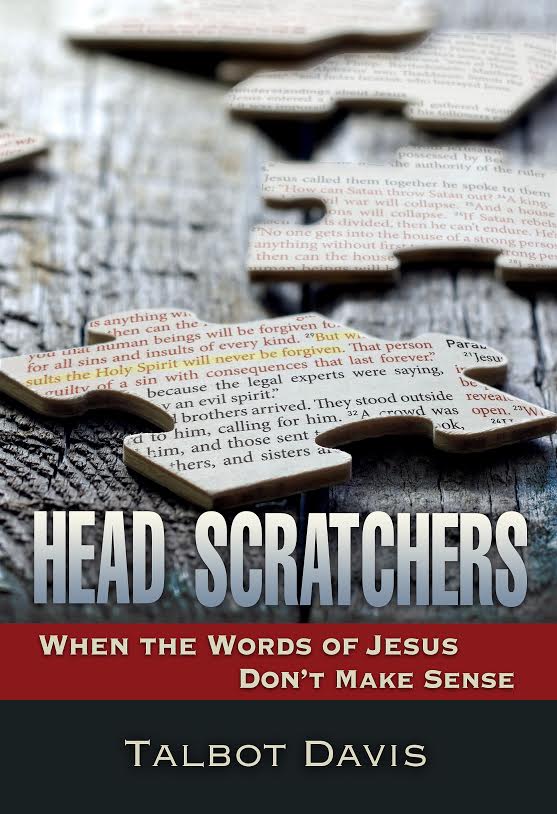
The Early Buzz On Head Scratchers
April 15, 2015 at 3:45 am 0
Brian Sigmon is the Abingdon editor who found the Head Scratchers material online in the summer of 2014, approached me about publishing them, and VOILA! the rest is a triology's worth of history. Here he is talking Head Scratchers the book: https://www.youtube.com/watch?v=aSP7TB9ScX0 He told me he was pretty proud of the line, "not just about explanation but transformation."  I told him it sounded like he'd been taking preaching lessons from Good Shepherd.    
CONTINUE READING ...
Uncategorized
“Solutionists” Launch — Week One Sermon Recap: “Problemists”
April 13, 2015 at 3:10 am 0
  For the first time ever, I began a series by telling where the series idea came from.  You'll read the story below. I think it worked pretty well, and helped tie the message to the overall ministry of recovery, something I desperately wanted to do. At the conclusion of one of the services, a friend said to me, "that felt like group therapy." I don't want every sermon to feel that way, but yesterday I most certainly did.  I'm glad my friend felt it.  Perhaps you will, too: (As far as the term solutionists, I borrowed that from a church that has a ministry called solutionary and from a company that has summits for its solutionists.) -------------------------------------------------------------------------------- Solutionists is one series where I know EXACTLY WHERE I was when I first had the idea. As some of you know our Zoar Road Campus has a Zoar Road Club which is full of recovery meetings, many of which are open to the public even if you are not an alcoholic. And I drop by periodically just to show that community how much Good Shepherd loves what they are about. Anyway, several months ago I was in one of these meetings – probably 40 people there – admiring the raw spirituality of the environment, when during the sharing time a man says, “We don’t have a drinking PROBLEM. We have a drinking SOLUTION. We’ve got all kinds of problems – marriage, parents, self-esteem, & money – and what we all have in common in this room is that our SOLUTION to those problems was to drink them away!” And I thought, “I may have just heard the single most brilliant insight into anything, anywhere in my life.” So I ran out to the car, wrote it down, thinking to myself, "that will preach!" & now 6 months later, here we are! And that’s also why the first message in Solutionists is called “Problemists.” Because I want to jump from AA into Scripture and back into our lives because in the big picture it is fascinating to me how much we confuse our problems and our solutions. This entire series, from faux solutions to real ones, comes from the best memoir in the biblical library, Nehemiah. Yes! A memoir! Written in the first person, sort of selective with details, and, as we are going to see, the facts are arranged in such a way as to put Nehemiah in a good light. More than that: as the book opens up, the main action, the scenarios that make up the dilemma to be solved, has already occurred. It’s like the biggest action took place off-stage. Here’s the deal: it’s 445 BC. And about 90 years earlier, the children of Israel have returned home from exile in Babylon (more on that in a bit) to a bombed out, burned up city. Jerusalem has become their city of ruins. See, way back in 587 BC (AV), the Jews had been conquered by Babylon and the best & brightest of its citizenry was chained and transported to Babylon to work as slaves. That lasted for 70 years. And then the Persians (Iran) (AV) defeated Bab in 539 BC and miraculously let the Jew return home to Jerusalem, they didn’t have the resources or the manpower or the wherewithal to rebuild the city well. By the time Nehemiah opens in 445 BC they had started a reclamation project but it was poorly done and the city looked like one of these sad Syrian places you see on TV today: burned up, hollowed out, devoid of both leadership and hopefulness. Now: all this is NOT Nehemiah’s particular problem. Look at 1:1:

The words of Nehemiah son of Hakaliah:

In the month of Kislev in the twentieth year, while I was in the citadel of Susa,

Nehemiah 1:11 gives more indication: I was cupbearer to the king. See, he is well over 1000 miles from his homeland – and he’s probably never lived there anyway – serving in the court of the king of Persia. He’s next to the seat of power, living in the lap of luxury. He doesn’t need to bother with any of these problems. But then he gets a report from the front lines in 1:2-3:

Hanani, one of my brothers, came from Judah with some other men, and I questioned them about the Jewish remnant that had survived the exile, and also about Jerusalem.

They said to me, “Those who survived the exile and are back in the province are in great trouble and disgrace. The wall of Jerusalem is broken down, and its gates have been burned with fire.” Wall, broken. Gates, burned. People in great trouble and disgrace. So: 587 destroyed, exiled. 539 returned. 90 years later, 445 BC, still in shambles. Why? What got the people of God out from under the protection of God and into this kind of situation in the first place? Why are there very lives broken and burned? Ah . . . do you remember how I said so much of the stage setting action in Nehemiah occurs off stage? In this case, in the OT books of 1 & 2 Samuel & 1 & 2 Kings? Well, Nehemiah summarizes it well as part of his prayer in 1:6-7: let your ear be attentive and your eyes open to hear the prayer your servant is praying before you day and night for your servants, the people of Israel. I confess the sins we Israelites, including myself and my father’s family, have committed against you. We have acted very wickedly toward you. We have not obeyed the commands, decrees and laws you gave your servant Moses.  What was that? We have not obeyed the commands. Well, do you remember the first of those commands? No other gods. And yet, if you know the history and you remember Nehemiah’s stage is set off stage, you realize that throughout the OT, from the earliest days to the latest, from the North to the South, what was the very thing the children of Israel did? Worshipped other gods! Baal (some of you remember the Southern pronunciation of Jezebel), Ashterah, Molech. They thought that by worshipping these other gods along with their Lord that it would give them safety with the neighbors. (Neighbors be like, “Let’s don’t attack! They worship our god too!). They also thought that worshipping the other gods would bail them out in case their OWN god didn’t come through. And, frankly, some of the men involved wanted the sexual excitement that came from Baal worship as that usually involved temple prostitutes. So they suffered from fear, insecurity, illicit desire, and their solution throughout their history as a people was to run after little tin gods. And so I see the predicament that Israel is in – broken wall, burned gate, hollow spirits – and I realize from Nehemiah’s words why that happened and it hits me: they didn’t have an idolatry problem; they have an idolatry solution. Their problems had to do with fear, insecurity, unpopularity, lack of trust, and excess libido. But the solution they sought is the thing that led them into exile and then lingering shame upon their return. And in April of 2015, not much has changed. Lord, I had a sick day awhile back and was just feeling rotten – because you KNOW getting sick means you’re a failure at ministry, right? – and, anyway, at the end of the day I binged on a bag of Gluten Free Sweet Potato chips (AV). But now I know: I didn’t have a chip problem. I had a chip solution to my larger problem of irrational insecurity! And I know that some of the females here – I know this because you tell me – bounce from relationship to relationship to relationship. Looking for something in a guy that’s always elusive. But I want you to realize now that you don’t have a guy problem. You have a guy solution! Or guys who are addicted to time on the internet – and I know this because you tell me! – you don’t have a porn problem; you have a porn solution! Goodness, some of the people here who move from spouse to spouse to spouse, hoping the next one will be “right”; you don’t have a marriage problem, you have a marriage solution. Those of you who cut . . . cutting isn’t your problem, it’s your solution. Or you who shop compulsively . . . it’s not a shopping problem, it’s a shopping solution. And then, for some of you here, it’s that way you sub a church or a PASTOR for a living relationship with Jesus Christ. And you don’t have a church problem; you have a church solution – and it’s a failed attempt at what only the Lord of the church can provide. Now: in all those I listed above, I can’t for sure name the real problem. Most often, they have to do with parenting issues, personal insecurity, or, most powerfully, the subtle thought that God is not good (that’s why we choose sin! We don’t think God is as good as the sin!). Yet even if I don’t know the exact problem, I know 100% for sure that the solution you’ve located for that problem ain’t working! Whether you are my friend at an open AA meeting or you’re living on your computer and you’re drowning in credit card debt. The solution is the problem. You’ve become a problemist. And that’s what Nehemiah is realizing about himself and the people he is going to represent. I love the wording of 1:7A: We have acted very wickedly toward you.   That lets you know that acting out is really acting at – in this case, acting at God. But look where Nehemiah goes next in his prayer: “Remember the instruction you gave your servant Moses, saying, ‘If you are unfaithful, I will scatter you among the nations, but if you return to me and obey my commands, then even if your exiled people are at the farthest horizon, I will gather them from there and bring them to the place I have chosen as a dwelling for my Name.’  Verse 8 begins with ‘Remember’! Can you imagine being that nervy with the Lord? Remember what you said, Lord! I hope you haven’t forgotten something, Lord! And then 1:9 contains some of the most glorious language in Scripture: READ. I love that. Even if they at the farthest horizon – which Nehemiah was as he prays; 1000 miles from Jerusalem in Susa! – God will bring them home. But the farthest they could wander from the presence of God – because of insecurity, fear, libido & the false solutions – is still not too far from God’s loving grasp. From his welcome home. They’re never too far and it’s never too late. And, Lord, it says everything to those of for whom the solution is now the problem. You’re never too far. It’s never too late. Your solution may have made you feel that your walls are broken and your gate is burnt and that you are beyond the farthest horizons . . . but no. The promise God had given to Nehemiah and the Jews is the promise that still stands today. The faux solutions you’ve sought will never have the final word. Because here’s what we get from Nehemiah’s story off stage and then his appearance here in Neh. 1: When you admit the solution is the problem, God surrounds you with his promises. Because look at the words Nehemiah ascribes to himself and his people (circle): GATHER, REDEEMED, SUCCESS, FAVOR. It all hinges on his that “Step 1” of v. 6: confession. We’ve blown it. Our solution is really our problem. And God answers back with this deluge of promises. It just makes me think of that friend of mine who after years of abusing alcohol stopped drinking. And he said, “Wow! I FEEL stuff now! I used to numb it all. Now I feel it all. Everything I feel isn’t always good but it is always better than numb.” Yep. When you admit the solution is the problem, God surrounds you with his promises. Or it’s even like Nehemiah’s name. Do you know what it means? The Lord comforts. Yep, not our fake self, not the one whose solutions are the problems, but our real selves who lift up all our flaws to the Flawless King. When you admit the solution is the problem, God surrounds you with his promises. So where is it today? You know. Where is it that God is dealing with you, letting you know that your solution is in fact your problem? Where have your solutions given you a broken wall and a burned gate? And where is he encouraging you to dig deeper, to peel back the onion of your own psyche, to see what the real problem is? Based on my experience, it’s usually something to do with mom and dad, something to do with with a warped view of how others think about you, or something to do with your sneaking suspicion that God is not really, truly good. That he is not authentically enough. Sometimes our inability to embrace and celebrate how thoroughly we are loved makes us move on to idols. We can’t accept God’s tenacious grace. Oh, if that’s you, just allow yourself to be surrounded in his promises. It’s why I love that Christ-centered treatment center in NJ where the residents do NOT identify themselves by their addiction (“I’m John and I’m an alcoholic.”) but by their Savior: “I’m John and I’m a blood-bought child of God who already has victory over drugs.” That’s a promise worth savoring. Speaking of which, let these promises surround you now . . .


CONTINUE READING ...
Uncategorized
“Solutionists” Launch — “Problemists”
April 10, 2015 at 3:38 am 0
https://www.youtube.com/watch?v=PM9iJEyJObs A lot of folks are good at pointing out problems. But precious few excel at pinpointing solutions. At Good Shepherd we are committed to becoming less of the former and more of the latter. So join us in this season after Easter in which we will journey with the Old Testament hero Nehemiah as he sought to bring solutions to some of the most intractable problems in his life and the life of his nation. Because we're on our way to becoming a church full of Solutionists. April 12:      Problemists April 19:      Let’s Do This April 26:     Food Network Solutionists May 3:        Oppositionists May 10:      The No Name Offense
CONTINUE READING ...