X

Talbot Davis

Uncategorized
#TBT — Some Famous 32s
June 9, 2016 at 3:58 am 0
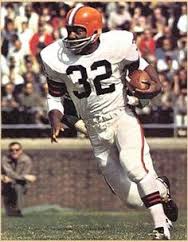
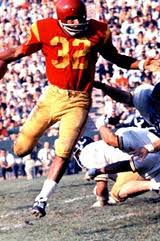
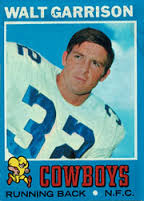
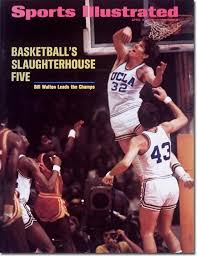
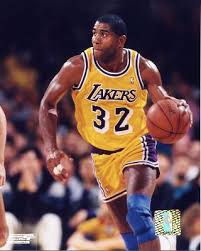
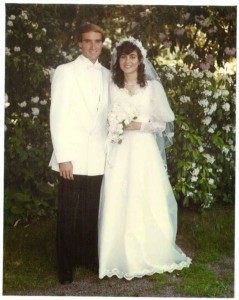
Through the years, there have been some high profile athletes sporting #32 on their jersey. First there was Jim Brown: Jim Brown   Then, OJ.  You know, before: OJ USC   My favorite football 32 was not so well known . . . unless you grew up in Dallas and loved the Cowboys: Walt Garrison   In basketball, there was Bill Walton: Bill Walton UCLA   And who could forget Magic in gold? Magic Johnson     And here's another 32.  Not so famous, I suppose, but it's a number that means something to us on June 9, 2016.   Wedding-Day-Hi-Ya-239x300
CONTINUE READING ...
Bible Study, Sermons
When A Church Has Horsepower
June 8, 2016 at 3:27 am 0
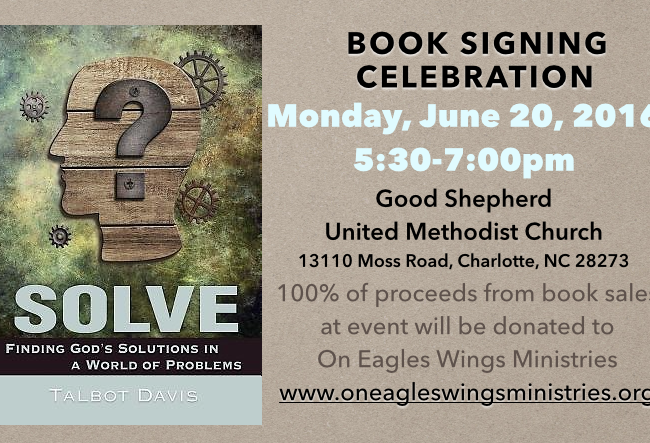
Do you remember those scenes in old Western movies in which a stagecoach raced across the American plain?   Stagecoach While we are grateful for the modern system of interstate highways, the stagecoach's image is nevertheless one of romance, energy, and alignment.  All that beauty and speed captured in all those animals -- and they were all headed in the same direction at the same time. You may consider me a slow learner, but I only recently discovered that the horsepower advertised in today's cars is based on a formula derived from . . . you guessed it . . . horse power. And there are times when churches have horsepower as well. Times when churches harness all their energy and all their muscle and head in the same direction with intentionality and alignment. For some churches, it happens during a capital campaign. For others it's during a Fifty Day Spiritual Adventure. For still others it's during an emphasis like Forty Days Of Purpose, Forty Days Of Prayer, or Forty Days of Love. At Good Shepherd, we often call these special seasons our Radical Impact Projects which you can read about here and here. How does such programming happen and such horsepower emerge from within the life of a church? This:  when sermons, small groups, students, and children are all digging into the same Scripture and the same subject matter.  In lessons and activities developed on an age appropriate basis, whole congregations become propulsive with power when all their sub-groupings are headed in the same direction at the same time. One of the earliest times we "caught" this truth was on our first ever "Grace" Sunday in 2012.  We offered a grace-based salvation message at all three worship gatherings, in our student ministries, and in our children's ministry settings.  The results were truly breathtaking, as over 100 people across all environments made saving decisions for Jesus Christ. Community Christian Church in suburban Chicago has summarized its approach in The Big Idea. While Good Shepherd gives more latitude to its LifeGroup and family ministries most of the year, there is a level of unparalleled excitement when we harness all our horses to head precisely in the same direction.  That's one of the reasons our current Preventology series has the buzz that it does: the entire congregation is reading the same Scripture each day (in this case, a chapter from Proverbs per day) and praying the same prayers.  That focused devotion and harnessed energy is vital to increasing a church's horsepower. All that is why I'm so excited about Solve, recently released by Abingdon Press.  We were able to turn a sermon series on Nehemiah into much more than a series of sermons.  It instead became a Radical Impact Project in which people moved on what they were moved by, and fed the city of Charlotte with a record-setting outpouring of food. I believe Solve can be an ideal church-wide project in the months to come.  You can order your copies here. And then watch as all the horsepower of your church gets directed not to pointing out problems but to pinpointing solutions. Sign up for my sermon tips newsletter and get additional sermon tips, information, and updates.  


CONTINUE READING ...
Sermons, Uncategorized
Top Five Tuesday — Top Five Elements Of A Good Wedding Ceremony
June 7, 2016 at 3:51 am 0
Maybe it's because my own 32nd anniversary is coming up on Thursday. Maybe it's because I have a spate of weddings over the next few months. Maybe it's because that spate includes that of my own son & his fiance. But I've been thinking about what makes a good wedding ceremony recently. What separates the holy from the hokey?  The transcendent from the trite?  What makes it worthy of worship rather than suitable for the WE network? There are many answers (including, well, it helps if the wedding party DOESN'T show up drunk) but here are five:   1. A couple that has spent more time and energy preparing for the marriage than they have planning the wedding.  Enough said.   2.  An opportunity for the community to participate.  When the pastor asks the father of the bride, "Who gives this woman to be married?" it's a sacred question.  But in these days of complicated family dynamics, I have often found it better -- and ultimately more meaningful -- to turn to the congregation and ask, "Who gives their blessing to this couple."  The resounding "We do!" grants a collective, communal affirmation every couple needs.   3.  A marriage charge that is specific, customized, and not based on I Corinthians 13.    I have a brief marriage charge in every wedding at which I preside.  And I am always astounded at the number of people who approach me afterwards and say they have never heard something like that.  Apparently, a good many clergy read through a ritual and offer no Scripturally-based marriage counsel.  A wedding is a marvelous time for people to overhear the Gospel if you combine subtlety and truth.   4.  Vows that are grounded in God and not in the couple.  One of my seminary professors told us not to allow couples to write their own vows.  So I don't.  Instead, I let the couple know they are reciting vows in union with couples who have gone before them for hundreds of years.   5.  A mixture of mirth and majesty.  With an anxious couple, overwhelmed parents, and empowered wedding planners, things can get heated and heavy.  That's why a wedding ceremony that has moments of wit and a feeling of casual grace goes a long way to helping people enjoy a wedding rather than merely endure it.   Are you a pastor or preacher who is interested in receiving tips and inspiration for sermons? Sign up for my newsletter and get tips, information, and updates.
CONTINUE READING ...
Bible Study, Sermons
The “How To Prevent The Coming Economic Collapse” Sermon Rewind
June 6, 2016 at 3:22 am 1
I had a few things I wanted to accomplish with Week 4 of Preventology:
  1. Let people know that no national economic collapse happens without a lot of individual collapses preceding it;
  2. Let them know that they are not victims of forces beyond their control;
  3. Let them know that by taking measures to live by biblical principles in the financial arena, they can prevent their own collapse;
  4. And ultimately let them know that we at Good Shepherd can "trickle up" to prevent collapses all around us.  In other words, we can save the country.
With those rather humble goals, I landed at this bottom line, inspired by both Andy Stanley & Dave Ramsey: Live beneath your means so you can give beyond your measure.   ---------------------------------------------------------------------   Just in case you came to church in a relatively good mood and NOT feeling like you could drink some Anti-Freeze, please allow me to reverse all that.  Ready to be depressed?  Great!  Here ya go: it’s the world debut of a specially prepared montage of books, notices, and memes about the UPCOMING ECONOMIC COLLAPSE. (AV) Aren’t you glad for that?  Aren’t you just like, “can we just end it now, please?”  According to these reports, it could happen in 2016.  Unless it doesn’t.  May 2017.  Or maybe . . . thinking back, we had 1929, we had 2008, so maybe we’re good for another 70 years or so!                And it is genuinely fascinating to me the ways people prepare for it.  Some make sure they’ve got plenty of weaponry, sure that a lack of resources is going to lead to an abundance of violence.  Others stock up on food and toilet paper (AV).  There are even some televangelists selling MREs so that people can get ready, stock up on food in Jesus’ name that I assume they’ll share with their family and no one else.  In Jesus’ name.  It reminds me of when I was a kid and all these people had bomb shelters in their houses to protect from nuclear fallout; today it’s to prepare for an economic one.  And that approach may well be fine, but look at what it assumes:  that a collapse is GOING TO HAPPEN.  And that as individuals we are POWERLESS to do anything about it.  It is inevitable, it will be dramatic, it is at least going to be a reprise of 2008 & you oughta just take care of your own.     But what’s the name of this series?  Prepare-ology?  No!  Preventology!  We at this church are much less interested in managing crises than we are in preventing them!  Because I have this crazy idea.  What if, what if, what if we could prevent a collapse from ever happening in the first place?  What if we took a portion of the energy we spend preparing and we re-direct it into preventing?  Now: I’m not a politician.  I’m not an economist.  I’m just a pastor.  And though this may seem like a large church to you, it’s hardly the largest in CLT or even in Methodism.  We’re a min-mega, OK?  But what if enough of us could start something HERE and we prevented our OWN financial collapses and then we caused a ripple, a cascade, a movement and all this financial preventioneering went viral?  That’s something worth pursuing!     What if we took care of the one person we can take care of and influence – OURSELVES – and enough preventing went on here that it just became the best kind of contagious?  Not sure if have enough person-power to prevent a Global event, but if enough of us prevent our OWN collapses, then it just might . . . trickle UP.     And the Master Plan of Prevention, the book of Proverbs, offers a remarkably simple pattern for avoiding your own collapse; for navigating on the personal level what so many say is inevitable on the national level.  Now:  when most of us think of the best way to ensure financial health, we figure it will come from: (AV)  A. More Money or B.  A LOT More Money.  But that’s actually a great illusion.  Financial health actually has relatively little to do with wealth and rather a lot do with habits.  I’m talking about the kind of financial health that is God-centered, God-saturated, and God-honoring.  That kind of health that understands what God has revealed about money and takes disciplined joy at lining up with that.  Because believe me:  God is interested in your money.  Very interested.  He really is.  Why?  Because it’s all his to begin with.     There are two sections in particular in Proverbs that will move us to financial preventology.  Look at 22:7:   The rich rule over the poor,     and the borrower is slave to the lender.   Uh oh.  The lender/borrower language is literally the language of slave and master.  Which some of you know all too well.  Hear me:  whether you are just starting out, in the middle of a mess, or even sitting comfortably in retirement, debt is a deal.  A deal breaker.  Some of you have credit card debt, others have student loan debt, others have new car debt, and still others have all three.  Because the world is divided into two kinds of people: those who PAY interest and those who MAKE interest.  And there are a lot more PAY-ERS of interest than MAKE-ers of it.  So if you are part of the majority who pay more interest than you make, here is the likely reason:  you are financing a LIFESTYLE just a little bit ahead of what you can truly afford.  Just a little.  Until a little turns into a lot.     Because here’s what debt and the lifestyle it finances is like:  (AV?)  A worm to a catfish.  Cheese to a mouse.  Trap to a bear.  It entices you to believe you can’t live without stuff – again, just ahead of what you can truly afford – to the tune of 18% interest a year.  Talk about a trap!  Not long ago, I was helping a guy who is getting back on his feet set up a checking account.  And the institution was trying to convince him to sign up for a program w/ his new debit card that the more you use it, the more points you earn.  If you’ve been out of that environment for awhile, it sounds like new technology and a good deal.  But what it really was was trying to get my friend to use that card more than he needed to or could afford.  Because plastic is not real, swiping is not the same as spending – UNTIL IT IS! – and it’s a very clever way to market.  And to get under-resourced folks in over their heads.  He didn’t sign up.  Deception to get my friend to live just ahead of, just beyond his capability, resource-wise.  Some of you are still digging out of just the same kind of enticement.     So Proverbs’ financial preventology begins with the notion that if you’re not in debt, avoid it, if you’re in it, plan your way out of it.  It’s why I do in fact love that Dave Ramsey guy on the radio every night and what I love most is the Debt Free Scream (YouTube one, please!) The phrase where a paid off house is the new BMW is just classic.  So debt is an 18% annual trap that has its roots in our desire to borrow from TOMORROW just enough to live just a little beyond what we can honestly afford.  And so Proverbs’ financial preventology certainly begins there – and we’ll circle back around to it – but it also involves something else before we land.     And this other place is so good.  Take a look at 11:24-25:   One person gives freely, yet gains even more;     another withholds unduly, but comes to poverty.

25 A generous person will prosper;     whoever refreshes others will be refreshed.

  It’s a really simple generosity reminder.  And I say reminder because God has hard-wired all of us to generosity.  What is the most famous bible verse?  God so loved the world he _______.  Right!  Gave.  So God’s fundamental nature is giving.  And you’re made in his image . . . which VOILA! means your natural inclination is towards generosity as well.  It’s just that some of you have never heard that and others of you have had layers of lies piled on top of it, but my job today is to remind you of who are you: a giver.  Whew! That was easy.     Because I so believe that when you give, God ensures that you have.  He just does.  It’s counter-intuitive, it doesn’t make sense, but I fundamentally believe that God sends advance blessings and advance provision.  I so remember that the very first summer Julie and I were married (32 years ago now!) a family member heard that we were going to start our married lives as tithers.  And this person warned us saying, “You can’t do that! You’ll never know when you’ll need that money!”  Well, that person missed the point.  Because we’ve given at that level and beyond, we haven’t needed.  And none of it was ours to begin with.  So we’ve never missed what was never ours.  So that life experience, this basic reminder from Proverbs 11 and you put the two elements together and it’s clear that the balance of debt and generosity is at the heart of financial health.  That treating both seriously and strategically is absolutely vital to prevent your own meltdown so that other meltdowns get prevented and next thing you know, we’ve saved the whole country.     Because here you go:  Live beneath your means so you can give beyond your measure.  See the “can I afford it?” is the wrong question.  There’s a lot of stuff you probably can afford – especially if you finance it – but that doesn’t mean you can or you should.  Because financial health is a matter of arranging your life under God’s banner and God’s principles with the realization that has you consciously live on less you can just as consciously give on more.  It’s discipline not just for the sake of retirement (thought that’s not bad) but for the sake of generosity.  It’s why the nicest millionaires you’ll ever meet are the ones who live next door, drive an old car, and invest anonymously in eternity.  Live beneath your means so you can give beyond your measure.      Where do you need to clean up the past?  Debt reduction?  Downsizing your place?  Rightsizing your car?  Do you know if you’re vulnerable to those calls like the ones I always get from Nissan?  We can LOWER YOUR PAYMENTS AND PUT YOU IN A NEW CAR!  Can I have a new house while I’m at it?  But no they can’t.  You can’t go lower than zero!  Don’t base decisions on monthly payments but on whether you’re serving the money or it is serving you.  And . . . if you are single or single again, do you have the kind of debt load that should you get married would be a most unpleasant surprise for your new mate?  Oh, don’t hold it close to the vest.  That kind of “reveal” never goes well.     Or maybe your past is clean and clear but it’s your future that needs attention.  And that’s not the gov’s job, not your company’s job, it’s your job.  I love those parents who teach their kids that when they have $10, they really have $8.  One dollar goes to God and one dollar goes to savings.  It’s the kind of math that should never change!  Talk about REFRAIN.  I just want you to make a decision, not as an event but as a process, so that you live on less so you can give on more.  Live beneath your means so you can give beyond your measure.      Because that giving pattern?  It’s the ultimate liberator.  I try to appeal to your better nature, to your design and not your duty, to remind you that generosity is part of your DNA. But I also have to couple that with what Chris Macedo told me:  You know, at some point you just have to do it because you’re supposed to.  It’s called obedience.  Doh!  Not very romantic . . . but true.  But as someone who tithed from 22 on and has been able to increase that % substantially through the years I want you to know that I share the view of the guy who said: “I don’t believe in tithing.  But it’s a good place to start.”  So it is.  And when you balance your life out by withholding from this pile so you can sow extravagantly in this pile – a pile that molds eternity – as a happy consequence you will have the kind of steady, God-honoring financial plan that prevents your own economic meltdown.  And maybe, just maybe, that of a whole lot of other people as well.  REFRAIN   The sermon finished with this video interview with the Hoffmans:   https://www.youtube.com/watch?v=kwc7IevNHkU&feature=youtu.be      
CONTINUE READING ...
Uncategorized
Preventology, Week 4 — How To Avoid The COMING ECONOMIC COLLAPSE
June 3, 2016 at 8:47 am 0
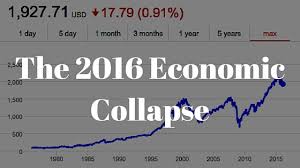
So is this what our future looks like? Econ Collapse   Is it inevitable? Will it be impact everyone? Or . . . will it be Donald's fault?  Hillary's?  Or the Libertarian candidate's? Or is there a completely different way to approach money, resources, and national crises? I think there is.  And I can't wait to share it with you. Sunday. 8:30, 10, 11:30 on Moss Road.  11:30 Latino.  10, 11:30 on Zoar Road.  
CONTINUE READING ...