X

Talbot Davis

Uncategorized
Nehemiah, Sanballat, Opposition, And Christmas
December 21, 2016 at 8:22 am 0
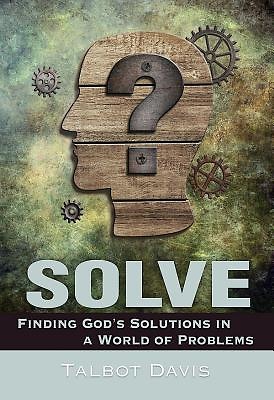
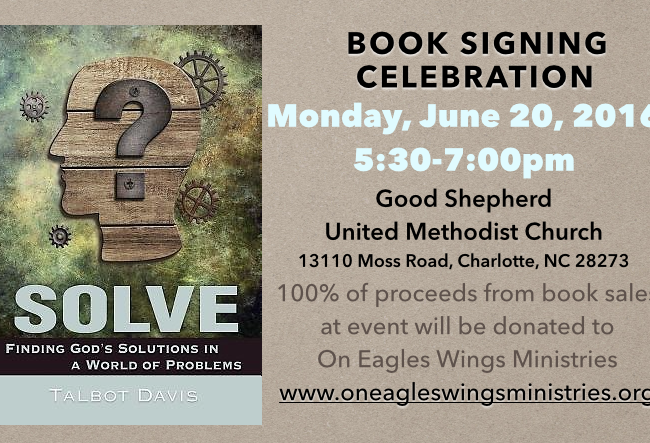
In the Old Testament book of Nehemiah, the title character has a dreaded and persistent opponent named Sanballat. And . . . we all have Sanballats in our lives.  Athletically, professionally, spiritually, and personally.  So how to deal with them?  Here are some thoughts from my book Solve: First: Don’t defend yourself. Many, many Sanballats operate by distraction. Their goal is to distract you from what you need to be doing. They seek to control a situation by asking questions that don’t need to be answered. That’s worth repeating: Some people seek to control a situation by asking questions that don’t need to be answered. That’s what Sanballat and Tobiah did. They asked Nehemiah and the builders, “What are you doing?...Are you rebelling against the king?” (Nehemiah 2:19). They even turned this question into a formal accusation with which they threaten Nehemiah (see Nehemiah 6:6-7). All of this amounted to a distraction that didn’t deserve a reply. Nehemiah had official royal backing from the beginning of his journey; he didn’t need to bother answering their question or their accusation. Nehemiah wisely recognized their question for what it was: a distraction. And he didn’t let it side-track him. You can waste all kinds of time and all kinds of energy trying to answer what can’t be, and shouldn’t be, answered at all. I remember back at Christmas in 2010, when Good Shepherd Church did the sermon series called What Child Is This? The congregation gave $207,000 to fight sex trafficking in India. It was incredible, and there girls walking free today because of the good work we did that Christmas. A short time therafter, someone asked the question: “Where was the star?” We hadn’t gone all-out on Christmas stage décor that year because we had a higher calling to free girls being raped for profit. But…where was the star? I have to tell you, if your take-away from a Christmas Eve about freedom for sex slaves was that your decorated Bethlehem star got taken away…who has time to address that? I didn’t. Don’t defend yourself. Depend on God. Second: Keep at it. I said earlier that Sanballats love to turn your attention and your energy away from the important work you are called to do. If they can’t stop the work, they will try to slow it down. Sanballat and the others tried to lure Nehemiah into an ambush, sending messengers five different times to call him to a meeting (Nehemiah 6:1-7). His response each time is simple: “I’m doing important work so I can’t come down. Why should the work stop while I leave it to come down to you?” I love that! Nothing fancy, just “I’m busy!” And so are you. After you thank God for that oppositionist reminder to lean on God more, put your head down and get back to work. Nehemiah’s relentless focus on the work of the wall—which was really God’s work—allowed him to push through despite the heavy opposition that he faced. That kind of focus is a good example for us to follow. In 2011, almost everything about Good Shepherd Church place changed. Why? Because, as I mentioned in Chapter Two, we refocused ourselves singularly around our mission of inviting all people into a living relationship with Jesus Christ. That power and focus of that mission puts the words of Nehemiah 6:3 in all our mouths: I’m doing important work, so I can’t come down.” I get up every day wondering, “What massively small step can this church take today to invite all people into a living relationship with Jesus Christ?” We can learn a lot from Nehemiah’s response to his enemies. But the most important insight is this: Opposition isn’t the enemy. Self-reliance is. It’s about God, not us. And Nehemiah’s enemies were a gift precisely because they moved him recognize that crucial fact. Every time the encountered their hostility, he turned to God. Look again at the irony of Nehemiah 6:16: “All of the nations around us were afraid and their confidence was greatly shaken. They knew that this work was completed with the help of our God.” Nehemiah was not afraid of his oppositionists; they were afraid of his God. When we are weak, then we are strong. God gives opposition to grow desperation.   If you found this helpful, you may want to pick up a copy of Solve for you or someone you love at Christmas.  You can do so here.  
CONTINUE READING ...
Uncategorized
Top Five Tuesday — Top Five Reasons We Have A “What We Believe” Statement At Good Shepherd
December 20, 2016 at 3:38 am 0
I have been thinking about churches that have a publicly codified Statement Of Belief recently.  I even referred to one such statement on Sunday and had sent a link to ours to a new attender earlier in the week. So I want to devote this space today to explaining why we spell our beliefs out at Good Shepherd, and why such a statement matters.  Because you could say (and perhaps some of you will), "Why don't you just post the Apostles' Creed or the Nicene Creed as your statement of faith?  Isn't it good enough?" Well, of course they are.  The Creeds are certainly enough, especially when we use them as acts of worship.  But there are a number of reasons why we expand upon the creeds some 1800 years or so after their completion. So here are five reasons why we have a "What We Believe" Statement at Good Shepherd . . . followed by the statement itself. 1. A Statement gives theological structure to who you are as a church.  For example, Good Shepherd's statement clarifies our stand on issues like the triune nature of God, the inspiration of Scripture, the reality of heaven and hell, and our confidence in the ultimate return of Christ. 2. A Statement sets theological boundaries as to who you are NOT as a church.  We're Trinitarian, not Arian.  We're Scripturally conservative, not theologically progressive.  We believe Jesus is decisive for eternity, which means we're not universalists.  And we believe in salvation by grace, which means we don't teach works righteousness.  We believe Jesus' return will be sudden, explosive, and unmistakable, which means we are not dispensationalists.  Those distinctions may seem like a lot of minutia . . . until they're not. 3. A Statement expresses what kind of Methodists we are.  We're the lifting the bible kind, that's who.  And the kind who still celebrate the gifts of prevenient grace (God is working on you when you're not looking for him), free will, assurance, as well as the ongoing ministry and miracles of the Holy Spirit. 4. A Statement gives backbone to the mission. Our mission is and will remain inviting all people into a living relationship with Jesus Christ.  Our "What We Believe" -- not really for use as a rallying cry or a worship moment -- provides that mission with skeletal stability. 5. And the Statement is . . . here below:  

What We Believe

About God God is the Creator and Ruler of the Universe. He eternally exists in three persons: the Father, the Son and the Holy Spirit. About Jesus Christ Jesus Christ is God wrapped up in human flesh. Jesus lived a sinless human life and offered himself as the perfect sacrifice for the sins of all people by dying on a cross. He rose from the dead after three days to demonstrate his power over sin and death. He ascended into heaven and will come again to judge the living and the dead, and to reign as King of Kings and Lord of Lords. About the Holy Spirit The Holy Spirit is co-equal with the Father, and the Son. He is present in the world to make people aware of their need for Jesus Christ. He also lives in every Christian from the moment of salvation providing power for living, understanding of spiritual truth, and guidance in doing what is right.  We believe in the full expression of the gifts of the Holy Spirit. About the Bible We believe that God inspired the composition and collection of the Old and New Testaments. Therefore, it is inspired, eternal, and true. The Holy Spirit preserves and protects the biblical library in the church today and by it speaks God's Word to peoples of every age. About Salvation We believe that apart from salvation in Jesus Christ, people are lost and their eternal souls are in peril. We believe that people receive salvation and reserve their places in heaven through faith in Jesus Christ, not by good works (Ephesians 2:8-9). Human beings have their sins forgiven through accepting Christ's sacrifice on the cross. We further believe that those who do not accept Christ are separated from God eternally after their death. Another name for that separation is hell. About the Return of Christ We believe that at some unknown point in the future, Jesus Christ will return in full glory and triumph. There will be a bodily resurrection of all persons and final judgment to both eternal reward and eternal punishment. God will have ultimate victory over Satan and will establish a perfect kingdom in a new heaven and a new earth. About Methodism

As United Methodists, we join with our Methodist brothers and sisters around the world and claim the historic distinctives of Wesleyan faith: prevenient grace, free will, personal & social holiness, assurance of the believer, and a connected church.


 
CONTINUE READING ...
Uncategorized
The Mic Drop Sermon Rewind
December 19, 2016 at 3:53 am 0
I looked forward to the message all week. Now that's true most weeks, of course, but especially so for this past week.  Several staffers who had seen the message in advance told me they liked it, and, buoyed up as I am by words of affirmation, by Sunday I was ready to go. Called Mic Drop, the sermon looks at Matthew's version of Jesus' baptism and lands at a bottom line I first read in the work of preacher & professor Leonard Sweet: Jesus didn't come so you could use him to make a point.  He is the point. ------------------------------------------------------------ A couple of years ago, someone sent me a message saying that I had “dropped the mic.”  I had NO IDEA what she was talking about – was it BAD like “dropping the ball” or was it good in a way I didn’t even know about.  But it was clear it was a pop culture reference that I was too old and too square to know anything about. (Or too old AND too square.)  But I’m nothing if not determined – especially if it involves figuring out what someone is saying about me.  So I did some research and here’s what I found:  (Montage of Drop the mic moments culminating in Prez Obama).               So it’s this act of bold confidence whereby the artist, entertainer, or speaker says in so many words but in one action “I’ve said what I needed to say, done what I’ve needed to do, made my point, and really, there’s NOTHING LEFT TO BE SAID.”  So you drop the mic and exit the stage.  (And I know some of you are praying I will drop the mic here at GS and never return; you’re like, “yep, he’s said all he needs to say!”)               Except I don’t want to talk to you today about MY mic drop but about God’s.  And I want to do so in a story that’s not technically a Xmas story, but a story that IS about Jesus and it IS very early in his public life.  And it’s a story in which there are all kinds of opportunities for people and even Jesus himself to get distracted.  This is story both in its original setting (when it happened!) and now on the page is rife with potential for Jesus to get used to make a point.               And the story I’m talking about starts with John the Baptist.  It’s so funny – he’s not John the Preacher or the Author or the Methodist, he is John the Baptist.  So we know exactly what his ministry is about: baptizing people.  Helping them go public by getting wet.  And look at 3:11-12:   11 “I baptize you with[a] water for repentance. But after me comes one who is more powerful than I, whose sandals I am not worthy to carry. He will baptize you with[b] the Holy Spirit and fire. 12 His winnowing fork is in his hand, and he will clear his threshing floor, gathering his wheat into the barn and burning up the chaff with unquenchable fire.   Whoa!  Big stuff is coming!  Power and authority and a blaze of glory.  In telling the story this way, Matthew sets up our expectation that the very next scene will be full of fireworks.  And then . . . 3:13:   13 Then Jesus came from Galilee to the Jordan to be baptized by John.   Wa-wah.  It’s like, letdown city.  We expect a King & a Conqueror and we get a guy from Galilee?  Like saying he came from Idaho!  And notice, he comes to John.  John doesn’t go to him.  All that implies this Jesus is just regular and John is the dignitary.               And to make matters worse, Jesus in making the trek then says he wants John to baptize him.  Implying, again, John is the celebrity and Jesus is the apprentice.  So in 3:14, John recognized the problem:     14 But John tried to deter him, saying, “I need to be baptized by you, and do you come to me?”     Now: this makes sense to us in the 21st Century, especially if we see baptism AT LEAST IN PART as washing away sins because from the beginning we have understood Jesus as without sin.  Why does he need baptism for repentance & forgiveness when he’s never done anything he need about which he needed to repent and for which he needed forgiveness?  But in v. 15, Jesus prevails & John baptizes:    15 Jesus replied, “Let it be so now; it is proper for us to do this to fulfill all righteousness.” Then John consented.    Apparently, this is part of something planned, something bigger, something preparatory.  And here, at the baptismal moment, we get distracted.  Why was he baptized?  For sin? For the gift of the Holy Spirit?  And HOW was he baptized?  Sprinkled?  Pouring?  Dunked like a donut?  Wash cloth over his nose?               It’s funny – a lot of people use the fact that Jesus was baptized to make a point:  he did it, so you do it.  He was immersed (probably), so you get immersed.  He followed in obedience, so you follow in obedience.  We stand Jesus up, use him as a prop, to make a point we really want to make . . . in this case, about baptism (though as we’ll see in a couple of minutes, we use him to make a lot of other kinds of points as well.)                But it all changes in 3:16-17 when we see Jesus’ actual baptism and its aftermath.  In fact, in this verse we see that his baptism isn’t about him getting baptized!     16 As soon as Jesus was baptized, he went up out of the water. At that moment heaven was opened, and he saw the Spirit of God descending like a dove and alighting on him. 17 And a voice from heaven said, “This is my Son, whom I love; with him I am well pleased.”    He comes up (likely immersed, just sayin’, wanna make a point!), the voice comes out, and it is heard presumably by Jesus, John, and the well wishers who had gathered with their plastic food containers with names taped on the bottom for the covered dish to follow.  THIS IS MY SON!  You know what?  It’s Matthew’s version of John 1:14: the Word became flesh.  You know what else?  It’s the final time we hear the voice of the Father in Matthew!!! Mic Drop!  This is my Son, my Word, my flesh, my embodiment.  I’ve said what I needed to say; I’ve made my point, there’s no more I need to say.  You all thought you were coming for a baptism when actually you were coming for an inauguration!  A public declaration of what Jesus was all along.  It’s a Divine Mic Drop and we, along with those originals by the lakeside, are left standing with jaw dropping amazement.               And you know what he was declaring with that mic drop?  To all those wondering about baptism protocol, all those already wanting to use Jesus to make a point?  Even John himself?  This:  Jesus didn’t come so you could use him to make a point.  He is the point.  Yes.  God drops the mic so you’ll know Jesus is not a prop to further your agenda.  He is the agenda.  He is not an asset to your cause.  He is the cause.  He’s not an accessory to your life.  He is your life.  Yeah, people all over the world and through all kinds of times have used him to make a point of their own and each time God pulls us back to these remarkable, mic dropping words of Matthew 3.  No no no.  Jesus didn’t come so you could use him to make a point.  He is the point.  After all:  who else did the Father ever say this about?  No one.                See, this matters because on the one hand I know I have used him to make a point.  Sometimes it’s relatively harmless, like I’ll use Jesus to make a point that GS is the greatest, bestest church, like ever.  Jesus is nice, but he really is the set up to talk about what is most important to me:  this church.  Yikes!  Or even those times when I use parts of the bible more to prove my point than to shape my life.  Ever done that?  Seen the bible used that way?  The ultimate sort of trump card (can I still say that?) so you or someone else WIN the argument rather than that ultimate chisel that cuts away what is wicked so what is beautiful can remain.              But I’m not really alone.  Did we not see in the election season just passed how Jesus got paraded out, selectively, by both sides.  The R side used him to be against abortion.  The D side used him to advocate policies that bless ppl on the margins.  Lord, through the years (AV, a collection we have somewhere) we’ve had Patriot Jesus, Hipster Jesus, Rainbow Jesus, NRA Jesus, and my favorite, the one my son was subjected to in high school, Man’s Man, Football Player Jesus.  The Jesus of Now get on the field and kick their … !!  All of these Jesus caricatures used to further OUR agendas.               And I suspect it’s been even more pernicious in human history.  Because, after all, the Nazis used Jesus to make a point.  Jim Jones in Guyana used Jesus to make a point.  Segregationists in the Jim Crow area RIGHT HERE used him to make a point.  Jesus in the wrong hands with the wrong motives of people want to make their own mic drop instead of hearing God’s . . . is dangerous, toxic, and deadly.  When you see it, hear it, or are tempted to be part of it, please, please, please remember:  Jesus didn’t come so you could use him to make a point.  He is the point..               Which makes me ask . . . do you use him to make a point or is he the point?  Do you trot him out to bolster your arguments with your spouse, with your in-laws, with you co-workers, with your FB community?  Do you end up designing a Jesus who looks like a slightly more powerful, slightly nicer version of YOU?  See, what I am talking about in late 2016 is NOT a corny “I love Jesus” but instead a deep “the events of Easter weekend determine not only my eternity but my life until I get there.  He is no longer my prop; he is my point.  My life counts because of what he accomplished on the cross & through the resurrection.”  Jesus didn’t come so you could use him to make a point.  He is the point.               This is why the “invite Jesus into your life” saying just doesn’t cut it.  It implies your life is already really full and crowded, and if you can inch him things will get better.  It consigns Jesus to a part of your life when in actuality he is the whole of it!  It’s why Colossians 3:4 is absolutely stunning:  When Christ, who is your life, appears . . .  Oh Lord, the land between the commas says everything!  Everything.  Yeah, you don’t fit him into your life; you enter into his.  It’s a moment of surrender that shapes all the moments to follow.  Jesus didn’t come so you could use him to make a point.  He is the point.               It’s why this from a church’s “What We Believe” statement really intrigues me:  READ    No!  Look at that!  Where is his divinity, his sonship, his atoning sacrifice, an emphatic declaration of his resurrection, and a bold hope in his return?  Absent!  Why?  Because with really nice intentions, they’re using Jesus to make a point about kindness and compassion.  But in making that point, they’re missing THE POINT.  Jesus didn’t come so you could use him to make a point.  He is the point.               And isn’t that interesting that in this mic dropping voice from heaven there is also the appearance of a dove?  Fragile.  Unthreatening.  Subtle.  I love the contrast, the polarities.  Anthemic voice.  Intimate dove.  Roaring.  Gliding.  Bold.  Loving.  Massive.  Microscopic.  That’s just like God.  That’s even why the Lord had an earlier mic drop moment when he entered the world in the form of a helpless, wiggling, screeching baby.  It’s all just like God.  Jesus didn’t come so you could use him to make a point.  He is the point.               Maybe, just maybe every once in awhile I see it happen.  I’ve already confessed that Jesus is sometimes a prop in my life so I can talk about what really matters to me – this church.  That’s bleh.  But on occasion, when I am living in the Spirit and in touch with my better nature, I pivot and get it right.  In fact, this thing is so helpful that I’ve shared it with Chris Thayer who does the same thing.  It’s this: when sitting with people and counseling them I ask something of the Lord.  Because I hear some sad stuff, some painful stuff, some self-inflicted stuff.  There’s very little I haven’t heard.  And I know myself well enough to know I don’t have a good poker face.  So in the middle of that counseling, you know what I do?  “Lord, please let them see Jesus on my face.”  That’s all.  Jesus on my face.  Because even in those moments of people pouring out their hearts and seeking advice, my counsel is not the point.  My Savior is.
CONTINUE READING ...
Uncategorized
Confession: I Learned How To Read In Seminary
December 14, 2016 at 3:34 am 0
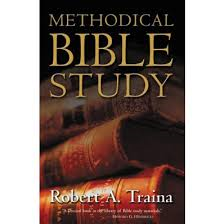
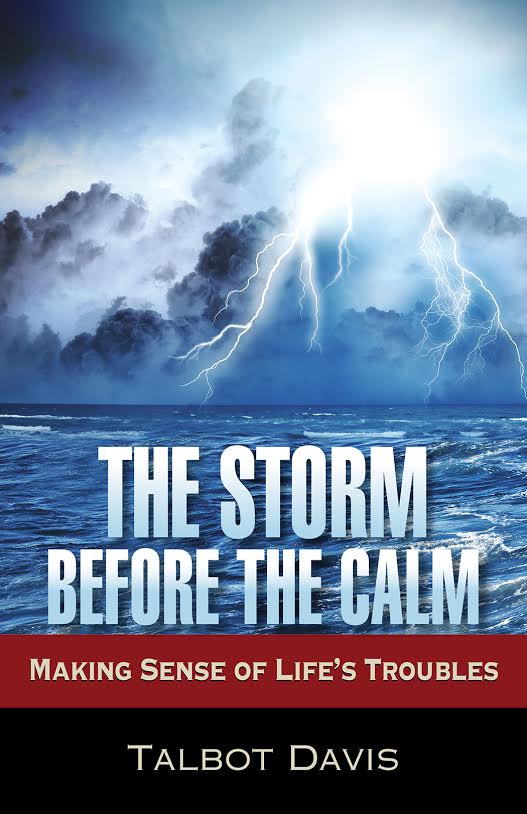
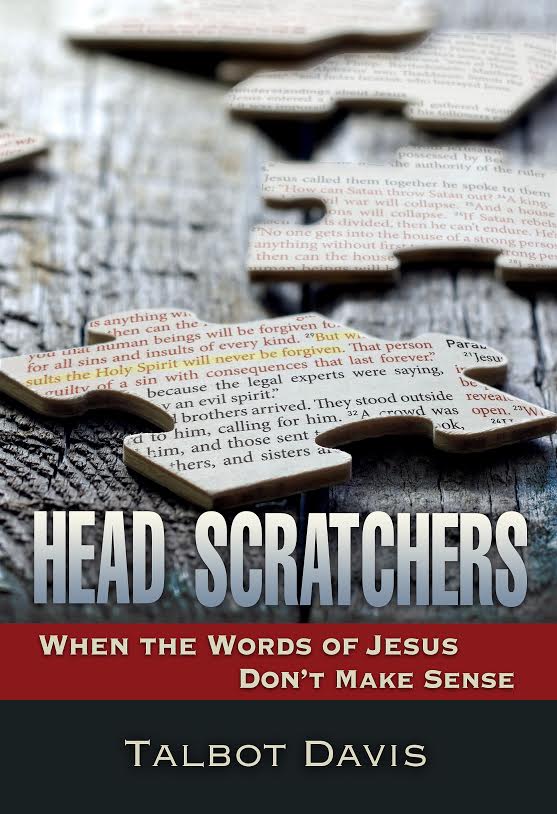
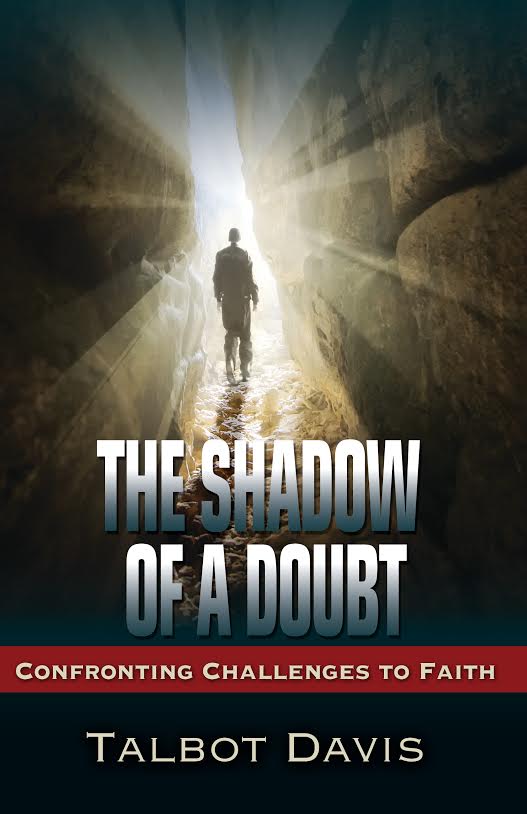
With apologies to my mother who taught me to read when I was four or five, and with all due respect to my undergraduate degree in English, I really did learn how to read in seminary. What I mean is that while at Asbury Seminary, I learned a method of close reading I still use today. I was immersed in a process of observing what’s going on in a piece of literature before trying to figure what it means. In short, I learned in seminary that how a piece is written is a large part of what it is saying. For that learned skill, I have Robert Traina’s classic book Methodical Bible Study to thank. Traina Little known outside the world of Asbury Seminary, Traina’s work spells out the structural elements vital to any written work: contrast, causation, cruciality, interrogation, recurrence, particularization and much more. So we learned how to read sections of Scripture by first paying attention to the structural laws at work. By looking at how the author put his words together we were then better able to open up what that author is actually saying. Twenty-nine years after my first exposure to Methodical Bible Study, I’m still using its principles when I study passages to prepare my messages. Every chapter of every Abingdon book I've authored, whether Head Scratchers, The Storm Before The Calm, The Shadow Of A Doubt, Solve, or even one I'll get to tell you about soon, began with the detailed reading & note taking I learned at the metaphoric feet of Robert Traina. So check out Methodical Bible Study. Perhaps you can learn how to read without ever going to seminary.

CONTINUE READING ...