Talbot Davis
January 23, 2017 at 3:08 am
0
What I have below is an approximation of what was preached at Good Shepherd yesterday.
That's because what is below is better in written form that what the talk looked like on Sunday.
Why?
Because the metaphor in many ways became the message.
The metaphor of an assembly in which we regard our bad habits not as a magically-appearing end product but as instead as the result of dozens of small steps and predictable patterns.
Our bad habits, in other words, begin long before they manifest in our lives.
So we had a conveyer belt on stage & I pantomined a production process. Using a tennis racket as my ultimate weapon, I demonstrated the bottom line:
To drop the habit, disrupt the patterns.
--------------------------------------------------------------------------
In high school, I had a friend who delighted in tormenting me. That shows something about how desperate I was for friends, does it not? “You treat me like dirt but you’re all I got!” Anyway, the one time I had a glimmer of hope for a girlfriend – I mean, just a sliver of the slimmest possibilities that she’d like me back – he said, “She’s gonna drop you like a bad habit.” Meaning: you might have her for a week, you MIGHT get to hold hands, but then you’ll get dumped. But the phrase in all that that has stuck with me is: she’s gonna drop you like a bad habit.
But in those 10, 15 years since high school, I might ask my tormenting friend, this guy who built himself up by cutting me down, do we really drop our bad habits? As I survey the landscape of my own life and the people I come in contact with, I see that many folks want to get away with their bad habits. To keep them up but in a way that they have no consequences on their larger lives. And then others among us have found out that once we develop the bad habit, no matter how hard we try, we can’t give it up. We formed that habit and now that habit is forming us. We didn’t even really notice it – because that’s what a habit is, after all, something you do without thinking – until it had us ensnared.
And the habits I’m talking about really run the gamut. For some of us, it’s chewing on fingernails.
For others, it’s picking at your teeth. Or your nose.
Still others, it’s unconsciously scratching yourself til you bleed. Then others, it’s smoking. Or overeating. Or smoking after overeating. And then for a few, it’s vegging out in front of the TV. Day after day after day. For many of you, I imagine it revolves around speaking without thinking, that you have an unconscious habit of allowing things to emerge from you without filtering how they process within you.
And then the gamut of bad habits runs to the more serious. Compulsive behaviors involving alcohol or Rx pills or street drugs or porn or sex or gambling or cutting or binging/purging. In those cases, no doubt, the habit has become more than a habit and morphed into an addiction. So in those places you wonder: how in the world can you drop something that is holding you back and holding you down? And note one thing about all these habits & compulsions before we move on: they overwhelmingly have to do with your body. Things you put in it, things you put on it, things you do with it . . . it is fundamentally a body thing. That’s imp for where we go.
Because I love what Paul has to say and how he says it. He is writing here to the church in Corinth, a church full of people with bad habits. I mean, the worst kind of habits. And those same people then had the nerve to stand up, beat their chest, and declare “I am the greatest Christian alive!” Look at what he says in v. 12: READ. See the quotes there? He is using things the Corinthians have said themselves; kind of cultural phrases in that city and in that church. A bit like if in Charlotte we were to say KEEP POUNDING, then all would know you’re talking about the Panthers. So the Corinthians themselves in their boasting have been saying both “I have the right to do anything” and Paul gently points out the absurdity of that. And then answers it succinctly with but I will not be mastered by anything. Because, as we’ll see, the things the Corinthians were asserting their rights to do were the very things that end up becoming both addictive and enslaving. And will Paul says he won’t be mastered or overpowered by anything it’s his ways of saying that because he serves the Master of All Things he refuses to be mastered by a thing. And here’s the deal: as we ponder how to – how to drop habits, or, using Paul’s lingo, how to not be mastered by any behavior or compulsion – we go about it all wrong. We go immediately to the OUTCOME – the habit! – without attacking the PROCESS that gets us there. It’s as if the bad habit / unhealthy compulsion / full blown addiction is a PRODUCT and we wait til the end of the assembly line to attack it.
Back to real life . . . let’s say your habit is drinking too much. Well, you don’t just wake up in the morning and say “I’m gonna get plastered tonight!” No, there are patterns at work before you get there. Frustrations, anxieties, even celebrations. And those, in the language of last week, become your CUES. The reward – very temporary – is what the first taste of alcohol does on your lips and the way it APPEARS (falsely, of course) to calm you down. But to stop that habit authentically, you need to interrupt those patterns. Or nail biting . . . there’s a pattern there. Sometimes it’s nerves, other times it’s boredom. But those patterns become your CUE and the next thing you know your fingers are near your teeth and it’s strangely comforting those socially off-putting. And then I know guys who travel and simply seeing that hotel key is a pattern for them – it means they can watch movies that at home they’d never watch. It’s a pattern, followed by a habit that has short term reward & long term devastation.
Every bad habit is merely the product of a series of steps, of decisions, of compromises, of patterns. We all too often attack the END PRODUCT instead of interrupting the assembly line that it took to get there. See, here’s what we need to do:
It’s like this conveyer belt we had built just for today:
DEMO OF WHAT WE DO, CULMINATING IN WHAT WE SHOULD DO, which is destroy the PATTERN before it ever becomes a PRODUCT. Conveyer belt and big hammer needed!
I say that because I believe that’s what Paul does here. The habits he will not be mastered by in the presence of the Corinthian church have to do with the intersection of sexuality & resurrection. Look at 6:13-14: READ. I love this – it’s like the whole of I Cor is written from ch. 15 BACKWARDS. Ch 15 is all about how the resurrection is at the center of Xn faith, hope, and gospel and because that will happen to our BODIES, what we do with our bodies in the here and now matters & matters eternally. (The Corinthians doubted that!) 6:14 in particular lets us know that when it comes to habits & compulsions, resurrection overtakes what has taken over us.
Then look at 6:16-17: READ. Now this is very interesting. We think we HAVE bodies. Ancient minds & ancient Jews in particular believed that we ARE bodies. That’s important to keep iin mind when it comes to habits, most of which as we have seen involve self-destruction of the bodily kind.
All of this theological genius wrapped up in Body Talk culminates in this simple command in 6:18: READ. Don’t get near the sexual habit / compulsion, don’t tempt it, don’t see what you can get away with, don’t ask like 7th graders used to: how far can you go without it being a sin. None of that. Flee. The stopping of the sex act happens miles before the sex act! In other words, a whole series of moves, compromises, negotiations, PATTERS that lead to sexual immorality. Paul sees the conveyer belt, the assembly line, and says STOP THE SOURCE WAY BEFORE THE END! Flee without flirting. Because Paul knew what so many people in habit breaking have discovered: To drop the habit, disrupt the patterns.
Yes! You can’t stop biting your nails if you don’t first disrupt the patterns – whether boredom or tension – that get you there. You can’t stop the compulsion towards porn unless you alter the patterns that get you there – time alone, travel (key!), an unfiltered, unmonitored computer or phone. You can’t stop the binge/purge cycle without disrupting the behavior patterns that get you there – often comparison, envy, complaining. And I’ve even heard from some of you that you can’t stop smoking unless you disrupt the pattern of the eating, coffee, & smoking trifecta.
A couple of years ago, I came to a pretty startling realization. See, driving into work I would listen to Sports Talk radio. Now, if you’re not familiar with the format, the idea for the hosts to be snarky, sarcastic, and combative. Snarky. Sarcastic. Combative. That’s what I’d listen to all along Hwy 160, onto 49 and right here into Moss Road. Snarky. Sarcastic. Combative. And in addition to the programming, who is the major advertiser on local sports talk? The Men’s Club! Where there ain’t no gentlemen! Great. Add one word: Snarky. Sarcastic. Combative. Lustful. Them’s are all bad habits! Well, you know what I realized? To change those AT WORK HABITS I had to change the GET TO WORK PATTERNS! So I decided: I’ve got to filter that stuff out. Music works. Music is good. Sometimes even Xn music! And how do I arrive at work now? Rocked out! Well, I’d say more creative and lyrical for sure. It makes a difference. REF
Our recovery friends know all this so well. They know that when you start down the path towards compulsive drinking, gambling, or more, you’re brain’s trap door shuts. The thinking part of your brain shuts off and you operate by the brute reptilian part at the base. That’s why people will tell you they go into a trance before acting on their addiction. And so what’s the rule in AA, GA, SA? Call someone. The pattern starts, the trance begins, the destination becomes inevitable, and so you don’t wait til the drink is poured before you say, “Oh, no, I guess not.” It’s way too late by then! The brain has put you on autopilot. The disruption happens very early … and so that’s why the mantra is “Make A Call.” Wanna drink, wanna bet, wanna cut, wanna whatever . . . Make A Call. Early. Because REFRAIN.
You may not be in a recovery group. You may not have an addiction. But I deeply suspect you have a bad habit. (If you think, “no, not really,” let me ask your mate – I bet that person would give at least 10!) Whatever that is, identify not the behavior but the dance that leads to that behavior. And then cut in on that dance and make it stop. And to every one of you who says “I can’t. I don’t have the will power.” I say, “you’re telling God he is a liar.” Why? I Cor 6:18-20: READ. You’re a bought person. Your body – the same one you are hurting with bad habits – isn’t yours anymore. It’s his. You don’t have the will power but he has all power. If he’s not Lord of all, he’s not Lord at all. REFRAIN
CONTINUE READING ...
 So what are my observations from a night being like a kid in a (rock) candy store? Here are my top five:
1. I am the Don Henley demographic. The audience was full of people who came of age in the 70s, who don't bring marijuana to concerts, and who think they are being oh-so-trendy by taking an Uber ride to get there (had my first one that night, by the way, and it was flawless). And, yes, the crowd was overwhelmingly Anglo ... a Don Henley concert is evidently not a full on, full color experience like a certain church I know.
2.Henley must feel so proud and grateful for his large catalogue of memorable songs. Whether it was 70s Eagles' hits like "Witchy Woman" and "One Of These Nights" or solo songs like "The Heart Of The Matter" and "The End Of The Innocence," people immediately began singing along. These songs and others have become part of the collective fabric of many, many lives. So I was thinking during the concert, "he must feel so good about his body of work and how it continues to resonate with the deepest parts of people's lives."
3. Some people get their Eagles confused. Early on, a woman behind me said to her friend, "When he does 'Take It Easy' the crowd will go crazy." Well, no, that Eagles song featured lead vocals by the late Glenn Frey. A bit later, as Henley was introducing a song with a lengthy tale about meeting a woman in a bar in 1973, the same woman exclaimed, "Oh, it's 'Lyin' Eyes'!" Right decade, right setting, wrong singer. Again Frey sang lead on that one.
4. "The Last Resort" is epic live. The song Henley introduced with the woman-in-a-bar story was in fact The Last Resort, which is the seven minute closing track on the Hotel California album. For years, Eagles fans have known and loved this reflection on manifest destiny but neither the band nor Henley have been eager to play it live. That's changed on this tour, and the results are simply astounding. If Hotel California is the Eagles Stairway To Heaven, then The Last Resort is its Kashmir - a sweeping, panoramic tour de force of melody, rhythm, and lyric. The closing line is brutal to the church but brilliant in its execution.
https://www.youtube.com/watch?v=Hdx6oyBOVj0
5. 1985 was a great year. Towards the end of the show, Henley and his band did a cover of Tears For Fears' "Everybody Wants To Rule The World" followed immediately by "The Boys Of Summer." The latter song, which is my favorite of all time, was released in late '84 but achieved its greatest popularity in 1985. Ah, the 80s.
6. A cell phone surprise. Henley's antipathy towards cell phones is well known. So if any in the audience had theirs on during the show, security -- AKA, cell phone police -- were quick to insist they be put away. But as the concert began, Henley offered us a deal: "if you keep your phones in your pockets during the show, I'll let you pull them out during the song about the hotel. Because Google always needs more content." So here goes:
https://www.facebook.com/100009729784333/videos/409362212731435/
So what are my observations from a night being like a kid in a (rock) candy store? Here are my top five:
1. I am the Don Henley demographic. The audience was full of people who came of age in the 70s, who don't bring marijuana to concerts, and who think they are being oh-so-trendy by taking an Uber ride to get there (had my first one that night, by the way, and it was flawless). And, yes, the crowd was overwhelmingly Anglo ... a Don Henley concert is evidently not a full on, full color experience like a certain church I know.
2.Henley must feel so proud and grateful for his large catalogue of memorable songs. Whether it was 70s Eagles' hits like "Witchy Woman" and "One Of These Nights" or solo songs like "The Heart Of The Matter" and "The End Of The Innocence," people immediately began singing along. These songs and others have become part of the collective fabric of many, many lives. So I was thinking during the concert, "he must feel so good about his body of work and how it continues to resonate with the deepest parts of people's lives."
3. Some people get their Eagles confused. Early on, a woman behind me said to her friend, "When he does 'Take It Easy' the crowd will go crazy." Well, no, that Eagles song featured lead vocals by the late Glenn Frey. A bit later, as Henley was introducing a song with a lengthy tale about meeting a woman in a bar in 1973, the same woman exclaimed, "Oh, it's 'Lyin' Eyes'!" Right decade, right setting, wrong singer. Again Frey sang lead on that one.
4. "The Last Resort" is epic live. The song Henley introduced with the woman-in-a-bar story was in fact The Last Resort, which is the seven minute closing track on the Hotel California album. For years, Eagles fans have known and loved this reflection on manifest destiny but neither the band nor Henley have been eager to play it live. That's changed on this tour, and the results are simply astounding. If Hotel California is the Eagles Stairway To Heaven, then The Last Resort is its Kashmir - a sweeping, panoramic tour de force of melody, rhythm, and lyric. The closing line is brutal to the church but brilliant in its execution.
https://www.youtube.com/watch?v=Hdx6oyBOVj0
5. 1985 was a great year. Towards the end of the show, Henley and his band did a cover of Tears For Fears' "Everybody Wants To Rule The World" followed immediately by "The Boys Of Summer." The latter song, which is my favorite of all time, was released in late '84 but achieved its greatest popularity in 1985. Ah, the 80s.
6. A cell phone surprise. Henley's antipathy towards cell phones is well known. So if any in the audience had theirs on during the show, security -- AKA, cell phone police -- were quick to insist they be put away. But as the concert began, Henley offered us a deal: "if you keep your phones in your pockets during the show, I'll let you pull them out during the song about the hotel. Because Google always needs more content." So here goes:
https://www.facebook.com/100009729784333/videos/409362212731435/


 What in the world is it and what does it have to do with "Habit Drop"?
To discover that, it's ...
Sunday.
8:30, 10, 11:30 at Moss Road.
10, 11:30 at Zoar Road.
11:30 Latino.
What in the world is it and what does it have to do with "Habit Drop"?
To discover that, it's ...
Sunday.
8:30, 10, 11:30 at Moss Road.
10, 11:30 at Zoar Road.
11:30 Latino. 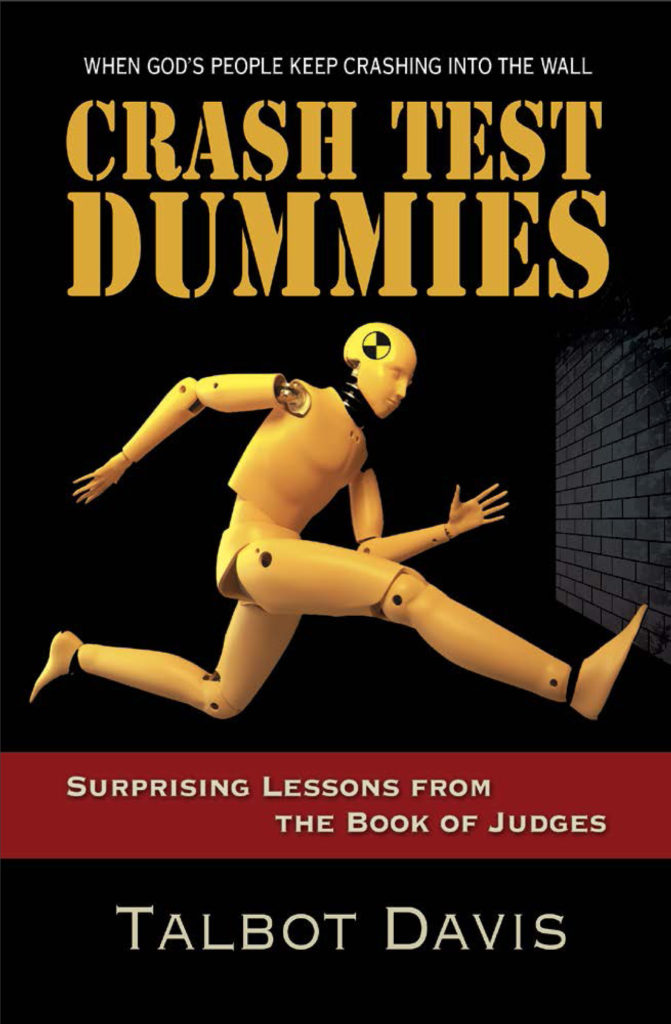
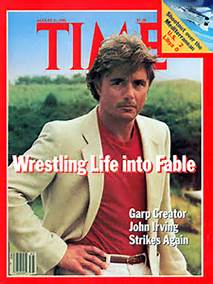 Only when he has the concluding line down and on paper can he go back and develop his characters and twist his plots. The last line first and then the novel is able to be written.
So I envisioned a moment where Judges' inspired author, no doubt depressed by the history he was tasked with telling, had a similar moment of clarity: "Let me write the last sentence first! Then and only then can the rest of the history unfold!" I'm not sure it happened that way, but it sure makes sense to imagine that it did.
That concept gave me a hook for the first message in the series (what will be the first chapter in the book) as well as a grid through which I could preach & teach the rest of the book. I didn't have to turn Samson, Gideon, and Jephthah into heroes because they weren't -- they were merely entertaining stops on the downward spiral to everyone [doing] as they saw fit.
The insights into authorship & composition are part of what drew the Abingdon editorial team to the content of Crash Test Dummies in the first place. They were also intrigued that one of their authors actually had enough material on the book of Judges to turn into a profitable study -- it's not up there with, say, the Sermon On The Mount or Psalm 23 as a subject for preaching, teaching, or devotion.
So: how to take a book that's long on mayhem and short on redemption and turn it into a sermon series (and a book) with some hope?
That's the subject for tomorrow's blog.
Only when he has the concluding line down and on paper can he go back and develop his characters and twist his plots. The last line first and then the novel is able to be written.
So I envisioned a moment where Judges' inspired author, no doubt depressed by the history he was tasked with telling, had a similar moment of clarity: "Let me write the last sentence first! Then and only then can the rest of the history unfold!" I'm not sure it happened that way, but it sure makes sense to imagine that it did.
That concept gave me a hook for the first message in the series (what will be the first chapter in the book) as well as a grid through which I could preach & teach the rest of the book. I didn't have to turn Samson, Gideon, and Jephthah into heroes because they weren't -- they were merely entertaining stops on the downward spiral to everyone [doing] as they saw fit.
The insights into authorship & composition are part of what drew the Abingdon editorial team to the content of Crash Test Dummies in the first place. They were also intrigued that one of their authors actually had enough material on the book of Judges to turn into a profitable study -- it's not up there with, say, the Sermon On The Mount or Psalm 23 as a subject for preaching, teaching, or devotion.
So: how to take a book that's long on mayhem and short on redemption and turn it into a sermon series (and a book) with some hope?
That's the subject for tomorrow's blog.